Moo Satay
หมูสะเต๊ะ
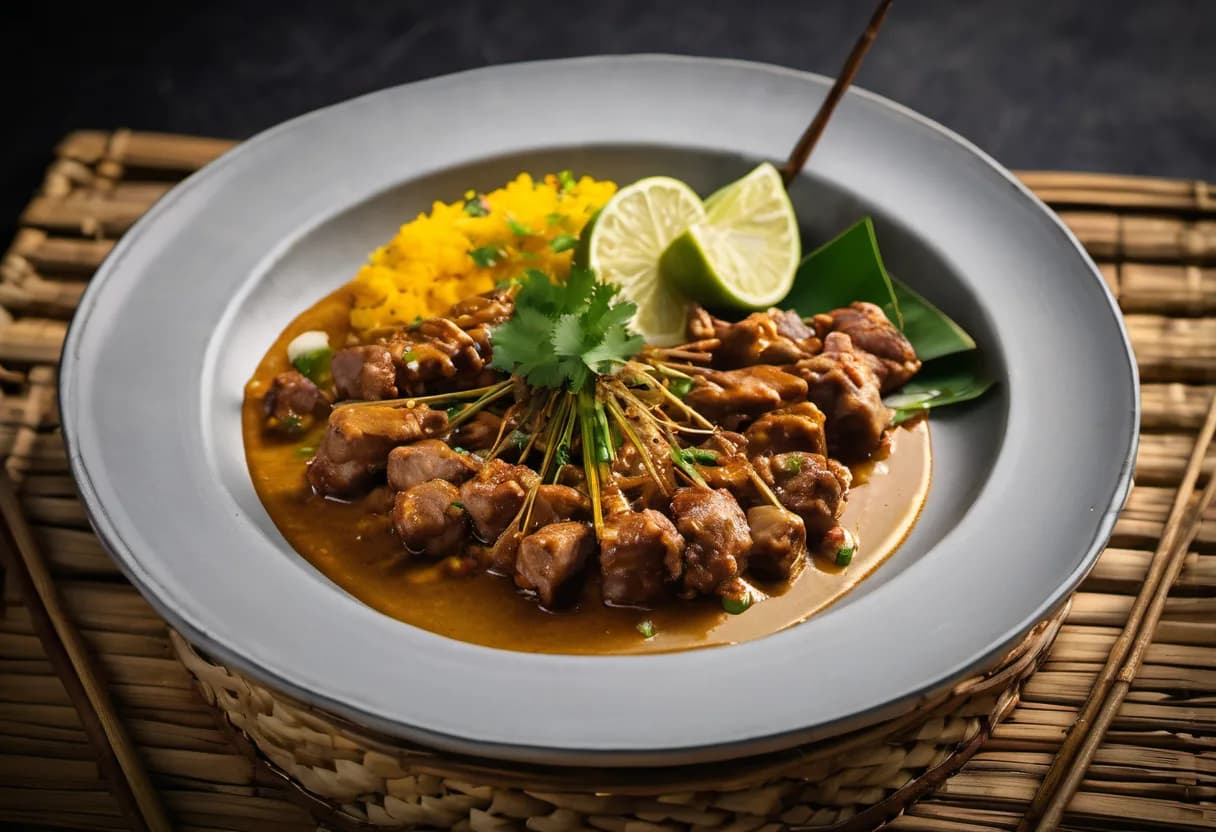
Moo Satay is Thai pork satay — thin slices of marinated pork grilled over charcoal on bamboo skewers and served with a rich peanut sauce and fresh cucumber relish.
Cultural Origin
Moo Satay is Thailand's version of skewered grilled pork in turmeric marinade, served with peanut sauce and ajat cucumber relish, adapted from the Malay-Indonesian satay tradition that reached the southern Thai peninsula centuries ago. It is now a staple of Bangkok hotel buffets, night markets, and Thai-Muslim eateries alike.
Allergens & Sensitivities
Key Ingredients
- pork
- turmeric
- lemongrass
- coconut milk
- peanut sauce
Taste profile
- Salty
- fish sauce, soy, shrimp paste
- Sweet
- palm sugar, coconut
- Sour
- lime, tamarind, fermentation
- Umami
- dried shrimp, fermented pastes, stock
The higher fat content of the pork cuts used here renders during grilling, giving a juicier, richer bite than the leaner chicken version, though the seasoning itself follows the same turmeric-and-peanut formula.
How Moo Satay Is Made
- 1
Selecting the cut
Pork with a higher proportion of fat, sometimes belly, is chosen specifically for this version, since the fat is what separates it from a leaner satay.
- 2
Slicing thin
The meat is sliced thinly against the grain into long, ribbon-like pieces that fold naturally onto the skewer rather than lying flat.
- 3
Marinating
Slices sit in a turmeric, lemongrass and coconut milk marinade for a shorter time than a tougher cut would need, since the thin slices absorb it quickly.
- 4
Grilling to render fat
Skewers are grilled over slightly higher heat than the chicken version to actively render the fat, with flare-ups from dripping fat treated as expected rather than a mistake.
- 5
Serving with the same sauce
The same peanut sauce and cucumber relish used across satay varieties is served alongside, so the fat from the pork is the main point of difference rather than the accompaniments.
When It’s Eaten
Sold from the same night-market carts as chicken satay, usually offered as a menu option alongside it rather than at a separate stall, and ordered specifically by diners who want the richer of the two.
How to Order It
- ขอหมูสะเต๊ะหนึ่งที่
- kor moo sa-te neung thi
- One order of pork satay, please.
- ไม่ใส่ถั่ว
- mai sai tua
- No peanuts (for the sauce).
What people get wrong
Assuming it is simply chicken satay with pork swapped in and ordering without checking the cut used; the fattier version is considerably richer than the chicken one, and diners expecting the same texture can find it heavier than anticipated.
Where to Try It
Night markets, street stalls, and restaurants throughout Thailand.
Tips
- Pork satay is juicier than the chicken version due to the higher fat content — request pork belly skewers for the richest version.