Khanom Chan
ขนมชั้น
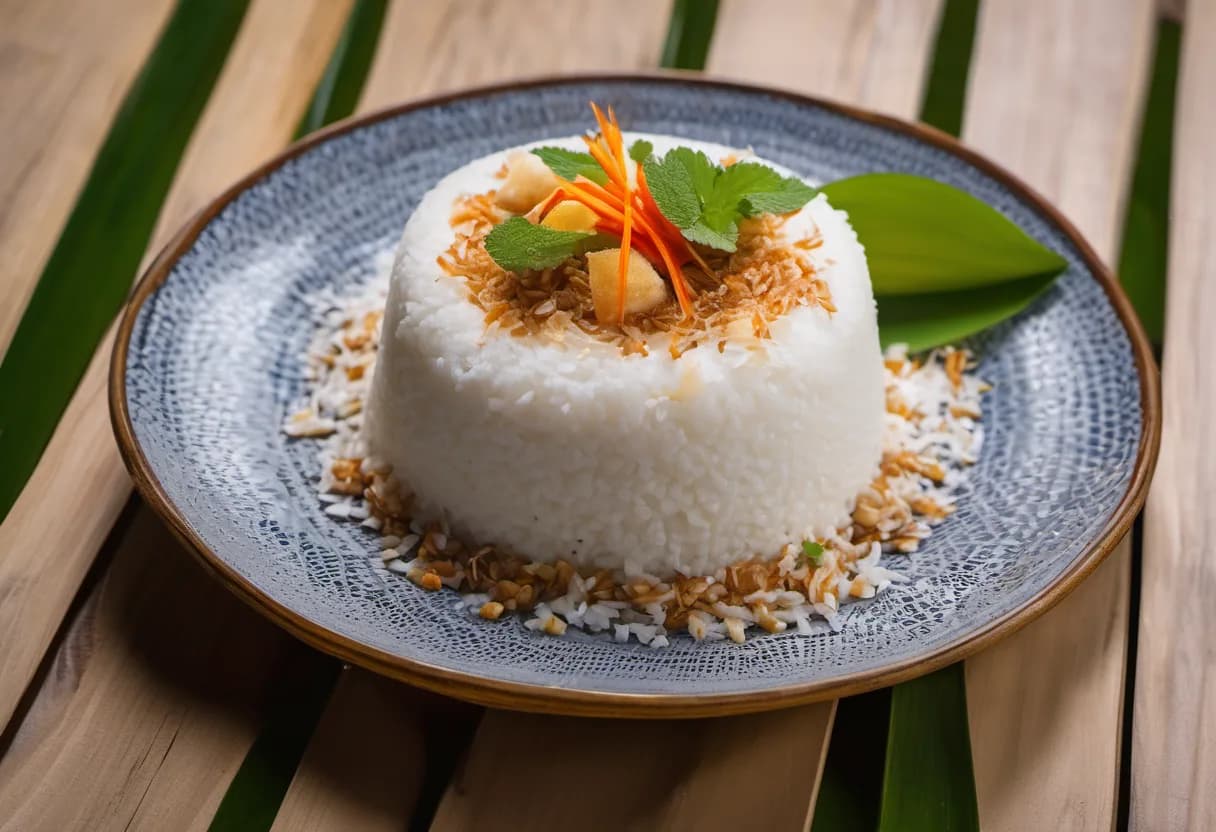
Khanom Chan is a Thai layered steamed dessert of tapioca starch and rice flour with coconut milk and pandan — served in distinct layers representing wishes for advancement and prosperity.
Cultural Origin
Khanom Chan is a classical Thai layered steamed dessert made of pandan-flavored coconut cream and rice/tapioca flour, with origins in Ayutthaya-era palace cooking. Its nine fragrant layers are considered auspicious and the dessert is often served at weddings, housewarmings, and merit-making ceremonies.
Allergens & Sensitivities
Key Ingredients
- tapioca starch
- rice flour
- coconut milk
- palm sugar
- pandan
Taste profile
- Salty
- fish sauce, soy, shrimp paste
- Sweet
- palm sugar, coconut
- Sour
- lime, tamarind, fermentation
- Umami
- dried shrimp, fermented pastes, stock
Texture matters as much as taste — a good piece is dense and slightly springy, holding a clean bite mark, while a poorly set one tears raggedly and feels gummy rather than firm.
How Khanom Chan Is Made
- 1
Mixing the batter
Tapioca starch, rice flour, coconut milk, sugar, and pandan juice are combined into a smooth batter, with a portion left uncoloured and a portion tinted green.
- 2
Steaming the first layer
A thin layer of one colour is poured into a tray and steamed just until set.
- 3
Alternating layers
The contrasting batter is poured on top and steamed in turn, and the process repeats layer by layer.
- 4
Building height
Each layer must fully set before the next is added, traditionally building to nine layers, a number considered auspicious.
- 5
Cooling and cutting
The finished block is left to cool completely before being cut into diamonds, since cutting while warm tears the layers.
When It’s Eaten
Served as a small sweet at room temperature rather than a bowl dessert, often alongside other bite-sized Thai sweets at ceremonies rather than eaten alone as a full portion.
How to Order It
- ขอขนมชั้นหนึ่งที่
- kor khanom chan neung thi
- One khanom chan, please
- อร่อยมาก
- aroi mak
- Very delicious
What people get wrong
Cutting or eating it while still warm from steaming — the layers have not fully set at that point and separate messily instead of holding their shape.
Where to Try It
Traditional Thai dessert vendors and auspicious ceremony caterers.
Tips
- The layers must be allowed to set completely between steaming — rushing the process results in layers that merge rather than separate cleanly.