Goong Ob Woon Sen
กุ้งอบวุ้นเส้น
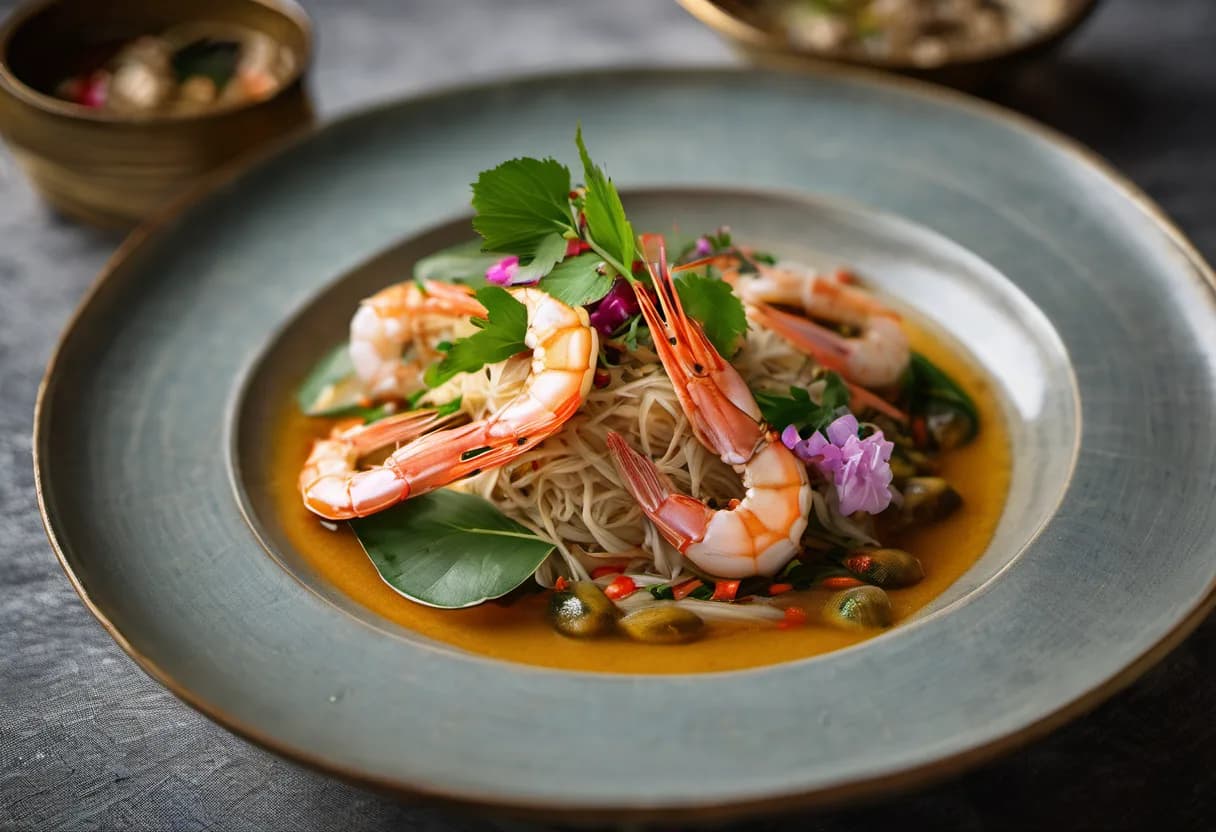
Goong Ob Woon Sen is a clay pot dish of prawns baked on a bed of glass noodles with ginger, celery, crispy garlic, and a savoury soy-oyster sauce — the noodles absorb the prawn juices and sauce as everything steams together.
Cultural Origin
Goong ob woon sen is a Chinese-Thai claypot dish of prawns baked over glass noodles with garlic, coriander root, white pepper, soy sauce and a splash of Chinese cooking wine. It comes out of Bangkok's Chinese-Thai seafood-restaurant tradition, where claypot cooking and glass noodles are both Chinese imports adapted to Thai aromatics. It is a default celebration dish at seafood restaurants nationwide.
Allergens & Sensitivities
Key Ingredients
- prawns
- glass noodles
- ginger
- Chinese celery
- garlic
- oyster sauce
- dark soy sauce
- white pepper
Taste profile
- Salty
- fish sauce, soy, shrimp paste
- Sweet
- palm sugar, coconut
- Sour
- lime, tamarind, fermentation
- Umami
- dried shrimp, fermented pastes, stock
Savoury and gingery rather than spicy, with the glass noodles taking on a deep, almost caramelised flavour from sitting at the bottom of the pot and absorbing the prawn stock and soy sauce.
How Goong Ob Woon Sen Is Made
- 1
Assembly
Soaked glass noodles are layered in the bottom of a clay pot with ginger, garlic and Chinese celery.
- 2
Prawns
Fresh prawns are arranged on top of the noodle layer.
- 3
Sauce
A mixture of oyster sauce, dark soy sauce, white pepper and a little stock or Chinese cooking wine is poured over everything.
- 4
Sealing and cooking
The pot is covered and set over direct heat, sometimes finished under a grill, so the contents steam and lightly caramelise at the same time.
- 5
Serving
The pot is brought to the table still bubbling, with the noodles at the bottom having absorbed the most flavour.
When It’s Eaten
Ordered as a shared dish within a larger seafood or Chinese-Thai meal rather than eaten alone, common at family-style restaurants where dishes are ordered to share across the table.
How to Order It
- กุ้งอบวุ้นเส้นไม่ใส่ผักชี
- goong ob woon sen mai sai pak chee
- clay pot prawns and glass noodles, no coriander
- ไม่ใส่พริกไทย
- mai sai prik thai
- no white pepper
What people get wrong
Only eating the prawns from the top and leaving the noodles — the glass noodles at the bottom, having soaked up the prawn juices and sauce, are generally considered the best part of the dish.
Where to Try It
Seafood restaurants and Chinese-Thai restaurants throughout Thailand — a staple of the Chinatown restaurant tradition.
Tips
- The noodles at the bottom of the pot, soaked in prawn juices, are the best part — dig to the bottom.
- Order for sharing as part of a larger meal — it pairs well with stir-fried vegetables and rice.