Yellow Curry
แกงกะหรี่
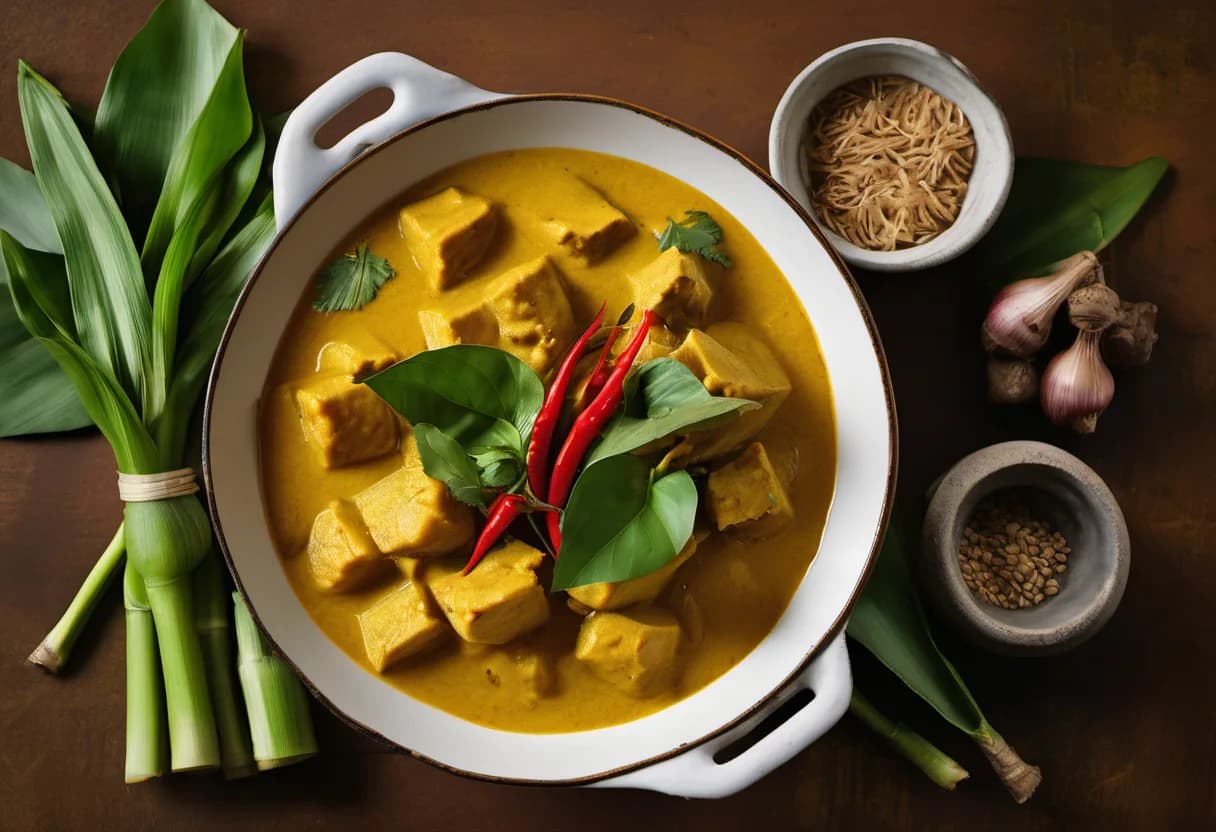
Thai Yellow Curry is a mildly spiced, turmeric-yellow coconut curry influenced by Indian and Malay cooking, typically made with chicken or potatoes and a relatively sweet, gentle sauce.
Cultural Origin
Gaeng kari, yellow curry, is a Thai-Muslim and Thai-Chinese curry whose turmeric-and-dry-spice profile reflects Indian influence carried by Muslim traders and Chinese-Hokkien yellow-curry traditions. It is milder than red or green curry, with coconut milk, chicken and potato — close in style to a Penang-Malay-derived curry. It is most associated with southern Thailand and Bangkok Muslim communities.
Regional Variants
| Region | How it differs |
|---|---|
| Central | Central gaeng kari is mild, sweet and yellow with coconut milk, chicken and potato — close to massaman in profile. |
| Southern | Southern versions are hotter and more turmeric-forward, often with fish, and reflect Thai-Muslim and Malay influence. |
Allergens & Sensitivities
Key Ingredients
- yellow curry paste
- turmeric
- coconut milk
- potato
- chicken
Taste profile
- Salty
- fish sauce, soy, shrimp paste
- Sweet
- palm sugar, coconut
- Sour
- lime, tamarind, fermentation
- Umami
- dried shrimp, fermented pastes, stock
The mildest of the coconut curries, with a gentle, slightly floral turmeric warmth rather than fresh chilli heat; texture is smooth and soup-like rather than thick.
How Yellow Curry Is Made
- 1
Building the turmeric paste
Dried chilli, lemongrass, galangal, garlic and shallot are pounded with a generous amount of fresh or dried turmeric and curry powder, which gives the paste its golden colour and mild, warmly spiced character.
- 2
Frying briefly to avoid bitterness
Coconut cream is heated until it splits, then the paste is fried in it briefly — less time than for red or green curry, since turmeric scorches and turns bitter if overcooked.
- 3
Adding chicken and potato early
Chicken pieces and cubed potato are added early with the thin coconut milk, since the potato needs time to soften through in the gentle simmer.
- 4
Simmering at a low heat
The curry is left to simmer at a low heat until the potato is tender and the chicken cooked, the mildness of the spicing meaning it can cook longer without becoming overwhelming.
- 5
Balancing with sugar and fish sauce
A little sugar and fish sauce balance the dish, which is served without the basil or kaffir lime leaf garnish typical of the sharper curries.
When It’s Eaten
A gentle, family-friendly option often ordered for children or for diners easing into Thai food; commonly paired with roti rather than rice at Muslim-owned stalls.
How to Order It
- ขอแกงกะหรี่หนึ่งที่
- kor gaeng kari neung thi
- One yellow curry, please
- ใส่มันฝรั่งเยอะๆ
- sai man farang yoe-yoe
- Extra potato, please
What people get wrong
Expecting the same profile as Indian curry because of the turmeric and mild heat — Thai yellow curry still carries lemongrass, galangal and kaffir lime, aromatics that set it apart from South Asian curries even at its mildest.
Where to Try It
Thai restaurants and street food stalls throughout the country.
Tips
- Excellent served with roti flatbread for dipping instead of rice.