Spring Rolls
ปอเปี๊ยะ
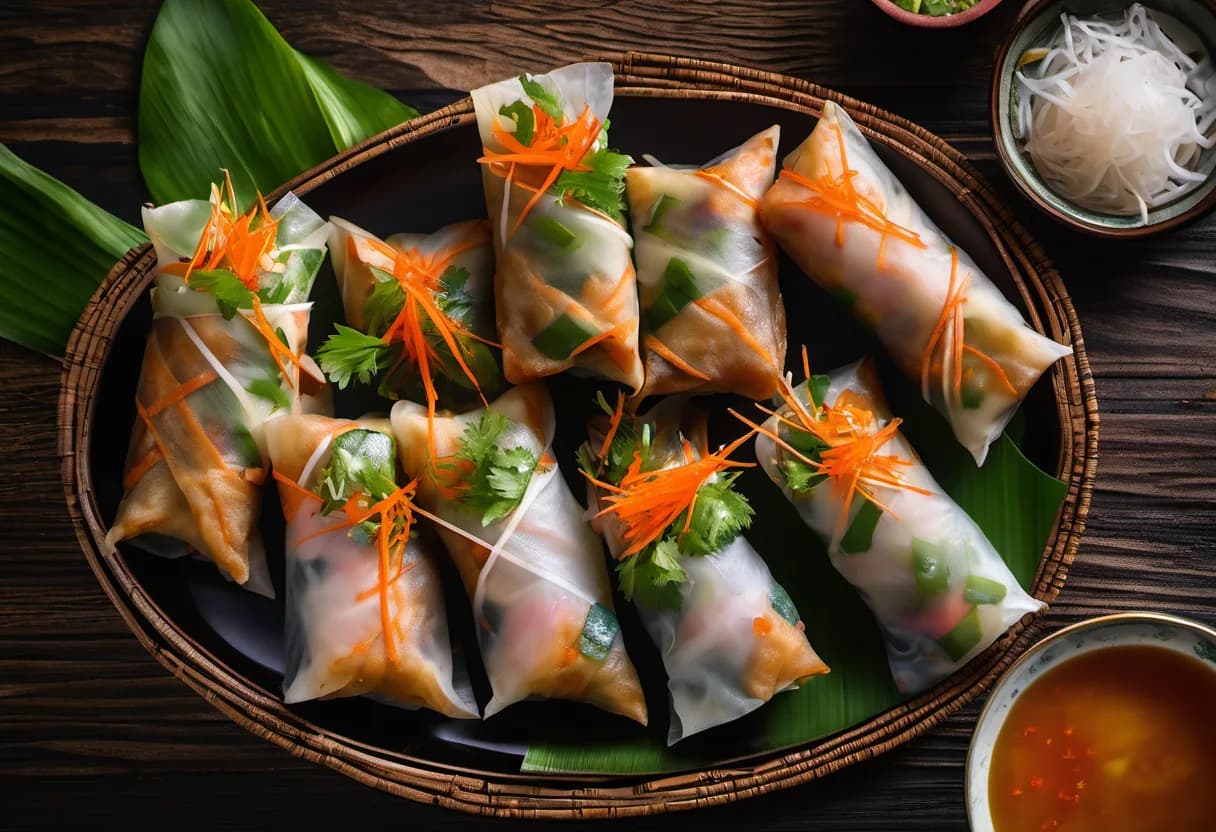
Thai Spring Rolls (Por Pia) are crispy deep-fried rolls stuffed with glass noodles, carrots, cabbage, and pork or tofu — a popular snack at street markets and as a starter in restaurants. Served with a sweet chilli dipping sauce.
Cultural Origin
Thai spring rolls (por pia) are a direct inheritance from Chinese chunjuan brought by Teochew and Hokkien immigrants, with both fresh (por pia sod) and fried (por pia tod) versions adapted to Thai tastes. The fried version uses wheat wrappers stuffed with glass noodles, cabbage, carrot and minced pork or shrimp, served with a sweet plum or chili dipping sauce. They are now standard appetiser fare in Thai restaurants worldwide and a staple of street-food carts.
Allergens & Sensitivities
Key Ingredients
- rice paper wrapper
- glass noodles
- carrot
- cabbage
- pork or tofu
Taste profile
- Salty
- fish sauce, soy, shrimp paste
- Sweet
- palm sugar, coconut
- Sour
- lime, tamarind, fermentation
- Umami
- dried shrimp, fermented pastes, stock
The filling itself is mild — cabbage, carrot and glass noodles carry little seasoning of their own — so the character of the dish comes almost entirely from the sweet chilli dip rather than from what is inside the wrapper.
How Spring Rolls Is Made
- 1
Preparing the filling
Cabbage, carrot and rehydrated glass noodles are shredded fine and lightly stir-fried with pork or tofu so the mixture is dry enough not to split the wrapper during frying.
- 2
Rolling
A spoonful of filling is laid along one edge of a thin wheat wrapper and rolled tight, with the final edge sealed using a smear of beaten egg or a flour paste.
- 3
Frying
Rolls are deep-fried in oil that is hot but not smoking, so the wrapper crisps and blisters slightly before the filling inside has a chance to overcook.
- 4
Draining
Fried rolls are lifted onto a wire rack rather than paper, which stops steam from softening the underside while they cool enough to eat.
- 5
Serving with the dip
A sweet chilli sauce is served alongside rather than poured over, so the crisp shell survives the walk from stall to table.
When It’s Eaten
Ordered as a starter or a between-meal snack rather than a main course, commonly alongside other fried street snacks bought from the same cart to share between two or three people.
How to Order It
- ขอปอเปี๊ยะหนึ่งที่
- kor por pia neung thi
- One order of spring rolls, please.
- ขอปอเปี๊ยะสดหนึ่งที่
- kor por pia sod neung thi
- One order of fresh, unfried spring rolls, please.
- ไม่ใส่ไข่
- mai sai khai
- No egg.
What people get wrong
Buying more than can be finished quickly — the wrapper is at its best only briefly, and rolls left in their paper bag steam themselves soft well before they go cold.
Where to Try It
Night markets and street food stalls across Thailand — fresh (unfried) versions called 'por pia sod' are also popular.
Tips
- Ask for 'por pia sod' if you want the fresh, unfried version wrapped in lettuce — it's lighter and just as delicious.
- The sweet chilli sauce (nam jim) that comes alongside is also excellent with other fried street foods.