Som Tum
ส้มตำ
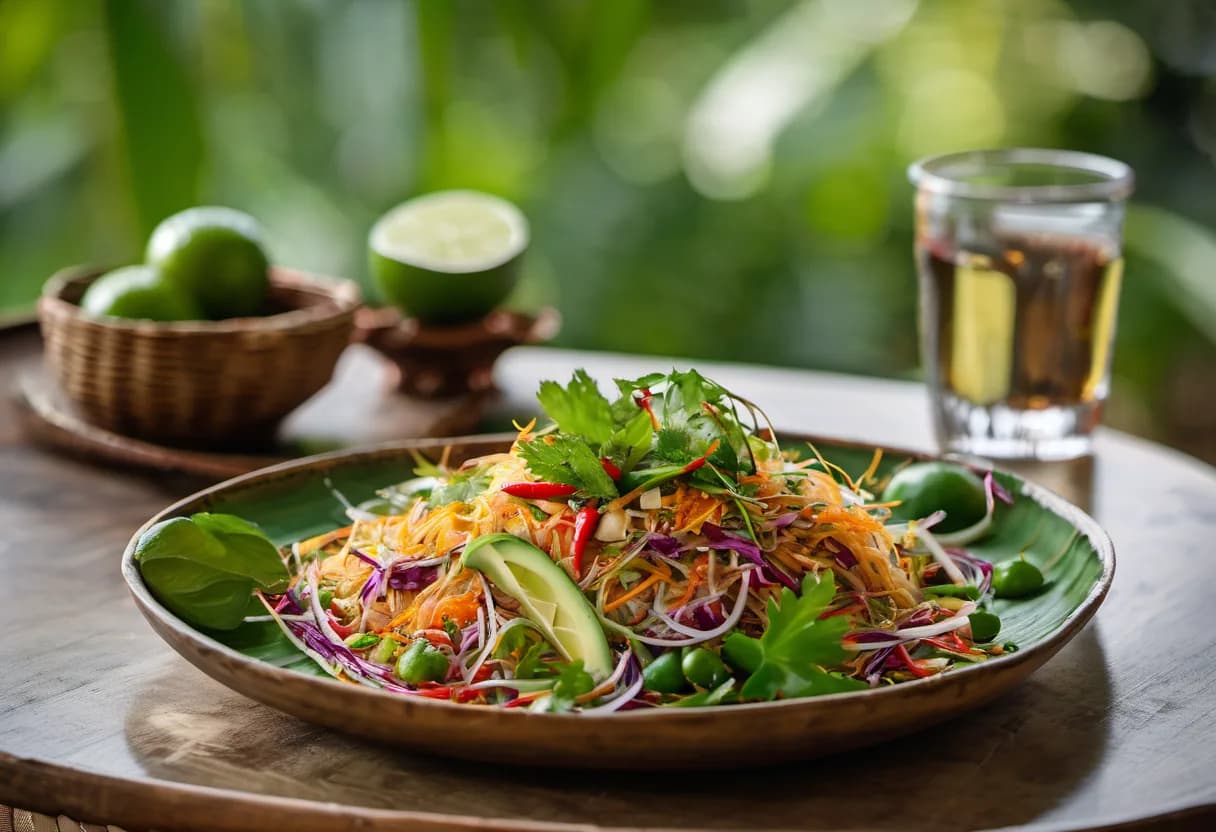
Som Tum is a fiery green papaya salad pounded in a clay mortar with chillis, garlic, lime, and fish sauce. Originating from Isaan in northeast Thailand, it's bold, crunchy, sour, and genuinely hot.
Cultural Origin
Som tum originated in the Isaan region of northeastern Thailand and neighbouring Laos, where the green papaya was adapted into a pounded salad after the fruit arrived from the Americas via Portuguese trade in the 16th-17th centuries. It is closely tied to ethnic Lao communities and to rural sticky-rice culture, and only became a nationwide dish in the late 20th century as Isaan migrants moved to Bangkok for work. Today it is sold from carts and shophouses across the country in dozens of regional variations.
Regional Variants
| Region | How it differs |
|---|---|
| Isaan | The Isaan original, som tum pla ra, is funkier and saltier, built on fermented fish sauce (pla ra) and field crab, with heavy chili and lime. |
| Central | The Bangkok-style som tum thai is sweeter and lighter, dressed with palm sugar, peanuts and dried shrimp instead of pla ra. |
| Northern | Northern tam som uses less fish sauce, sometimes adds black bean paste or local herbs, and is often eaten with sticky rice and grilled river fish. |
| Southern | Southern versions sometimes swap papaya for unripe mango or rambutan flesh and lean fiercer on bird's-eye chili. |
Allergens & Sensitivities
Key Ingredients
- green papaya
- bird's eye chilli
- lime juice
- fish sauce
- cherry tomatoes
Taste profile
- Salty
- fish sauce, soy, shrimp paste
- Sweet
- palm sugar, coconut
- Sour
- lime, tamarind, fermentation
- Umami
- dried shrimp, fermented pastes, stock
Crunchy from the shredded papaya and long beans, with a chilli burn that builds through the bowl rather than hitting all at once; the pounding bruises the ingredients just enough to release juice without turning it mushy.
How Som Tum Is Made
- 1
Shred
Green papaya is shredded into fine strips, either by hand with a knife or a coarse grater, kept crisp and unsalted until dressing time.
- 2
Pound the base
Garlic and chillies are pounded first in a clay mortar with a wooden pestle, bruising rather than pulverising, so the aromatics stay textured.
- 3
Add sour and salty elements
Lime juice, fish sauce and palm sugar go in next and are pounded briefly to dissolve, followed by cherry tomatoes, cracked just enough to release their juice.
- 4
Fold in the papaya
Shredded papaya and long beans are added last and tossed with a spoon and pestle rather than pounded, coating the strands without crushing them.
- 5
Taste and adjust
The vendor tastes and rebalances lime, sugar and fish sauce on the spot, which is why two bowls from the same stall rarely taste identical.
When It’s Eaten
Eaten as a shared starter or alongside grilled chicken and sticky rice rather than on its own; common at lunch and early evening, and rarely served as a solitary meal.
How to Order It
- ไม่เผ็ด
- mai phet
- not spicy
- เผ็ดน้อย
- phet noi
- mild
- ไม่ใส่ปูปลาร้า
- mai sai pu pla ra
- no fermented crab or fish sauce
What people get wrong
Assuming the chilli count is negotiable after pounding has started — the spice level needs to be stated before the mortar work begins, since the dressing cannot be diluted once it is mixed in.
Where to Try It
Isaan restaurants throughout Bangkok or any local market in northeast Thailand.
Tips
- Tell the vendor how many chillis you want — 'pet nit noi' means slightly spicy.
- Order with sticky rice (khao niao) to balance the heat.