Satay
สะเต๊ะ
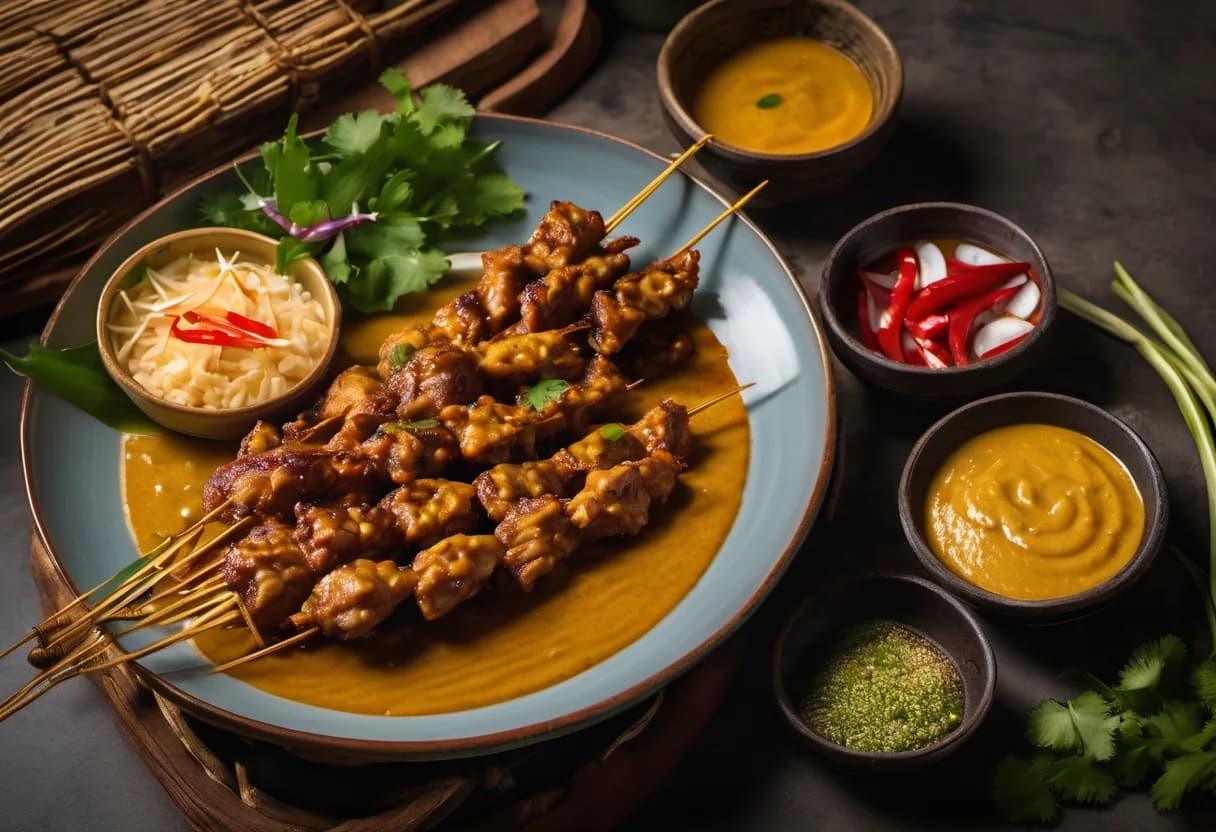
Thai Satay is marinated meat grilled on bamboo skewers over charcoal and served with a creamy peanut sauce and cucumber relish. It's a popular street food snack with Malay-Indonesian origins, sold at markets throughout Thailand.
Cultural Origin
Satay (sa-te) entered Thailand through southern Thai-Muslim and Malay communities, who in turn inherited the skewered-grilled-meat technique from Javanese sate brought across the Malay peninsula. The Thai version is heavily marinated in turmeric, coriander seed and coconut milk, then grilled over charcoal and served with a sweet peanut sauce and ajat (cucumber relish). It is now a nationwide street-food staple but remains strongest in the south and in Bangkok's old Muslim neighbourhoods.
Regional Variants
| Region | How it differs |
|---|---|
| Southern | Southern Thai-Muslim satay is the most traditional, with heavy turmeric and dry spice and a thick peanut-curry dipping sauce. |
| Central | The Bangkok version is sweeter and milder, often with pork and a smoother peanut sauce, served with ajat and toast. |
Allergens & Sensitivities
Key Ingredients
- chicken or pork
- turmeric
- coconut milk
- lemongrass
- peanut sauce
Taste profile
- Salty
- fish sauce, soy, shrimp paste
- Sweet
- palm sugar, coconut
- Sour
- lime, tamarind, fermentation
- Umami
- dried shrimp, fermented pastes, stock
The turmeric marinade colours the meat more than it flavours it — most of the seasoning sits in the peanut sauce, which is thick, nutty and only lightly spiced, so the dominant sensations are grill char and sweetness rather than heat.
How Satay Is Made
- 1
Marinating the meat
Thin strips of meat are steeped in a turmeric, coriander seed and coconut milk marinade long enough to turn the surface a distinct yellow, which tenderises the meat as much as it seasons it.
- 2
Threading the skewers
The strips are threaded onto bamboo sticks that have been soaked in water beforehand so they do not scorch faster than the meat cooks through.
- 3
Grilling over charcoal
Skewers are turned frequently over direct charcoal heat and basted occasionally with leftover coconut milk to stop the thin cuts from drying out before they char.
- 4
Reducing the peanut sauce
Ground peanuts are simmered with curry paste and coconut milk until the sauce thickens enough to coat a spoon, then a little tamarind is stirred in for sourness.
- 5
Cutting the relish
Cucumber, shallot and chilli are sliced and dressed in a light vinegar syrup just before serving so the relish stays crisp rather than pickled soft.
When It’s Eaten
Bought as a grilled snack rather than a full meal, typically from a cart with a visible charcoal tray, and eaten standing or on a nearby bench soon after coming off the grill rather than carried far.
How to Order It
- ขอสะเต๊ะหนึ่งที่
- kor sa-te neung thi
- One satay, please.
- ไม่ใส่ผงชูรส
- mai sai pong chu rot
- No MSG.
What people get wrong
Visitors often let the skewers sit while they order more food; satay is thin enough to cool and stiffen within a few minutes, at which point the meat toughens and the appeal of the char fades.
Where to Try It
Night markets, street stalls near BTS stations in Bangkok, and beach markets throughout southern Thailand.
Tips
- Eat immediately off the grill — satay loses its magic as it cools.
- Dip in peanut sauce, then take a bite of cucumber relish — the acidity resets your palate.