Red Curry
แกงแดง
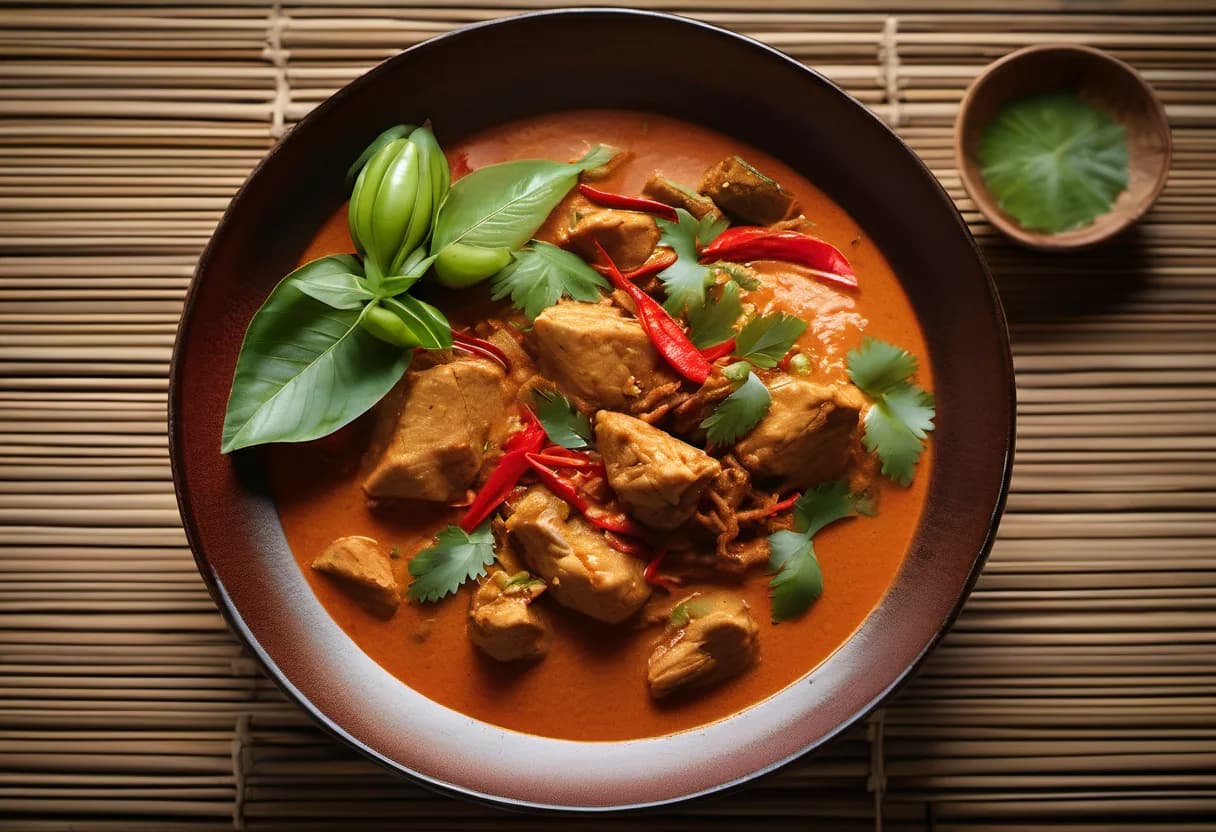
Red Curry (Gaeng Daeng) is a rich, aromatic curry made from dried red chilli paste simmered in coconut milk with your choice of protein and vegetables. It balances heat and sweetness with a deep, complex flavour profile.
Cultural Origin
Gaeng phet, red curry, is a Central Thai curry whose deep red colour comes from dried red chilies pounded with galangal, lemongrass, garlic, shallot and shrimp paste. It is one of the oldest curry pastes in the Thai canon and is documented in 19th-century palace cookbooks. The dish is now made nationwide in countless permutations with chicken, duck, beef, pork or fish.
Regional Variants
| Region | How it differs |
|---|---|
| Central | The Bangkok version is balanced sweet-spicy with coconut milk, Thai eggplant, sweet basil and bamboo shoots. |
| Southern | Southern red curries are hotter and more pungent, often with seafood or sator beans and less sugar. |
| Northern | Northern versions often skip or reduce coconut milk, producing a thinner, more herb-forward broth. |
Allergens & Sensitivities
Key Ingredients
- red curry paste
- coconut milk
- chicken or beef
- bamboo shoots
- Thai basil
Taste profile
- Salty
- fish sauce, soy, shrimp paste
- Sweet
- palm sugar, coconut
- Sour
- lime, tamarind, fermentation
- Umami
- dried shrimp, fermented pastes, stock
Dried red chillies give a deeper, mellower heat than fresh green chilli, with a smoky, earthy undertone from galangal and shrimp paste; the finish is rounder and less sharp than green curry.
How Red Curry Is Made
- 1
Soaking and pounding the chillies
Dried red chillies are soaked to soften, then pounded with galangal, lemongrass, garlic, shallot, coriander root and shrimp paste — the dried chilli gives red curry paste its characteristic brick-red colour and mellower, smokier heat.
- 2
Heating the cream until it splits
Coconut cream is heated separately until the oil splits out, giving a base rich enough to fry the paste without it turning watery.
- 3
Frying until fragrant
The red paste is fried in the cracked cream until the oil turns a deep red and the raw chilli smell has cooked off, several minutes over a low flame.
- 4
Simmering the protein
Chicken, beef or duck is added with the thin coconut milk and simmered until cooked through, longer for duck, which benefits from the fat rendering into the sauce.
- 5
Adding vegetables and seasoning
Bamboo shoots and pea aubergines go in near the end, followed by fish sauce and palm sugar to balance the paste, then Thai basil stirred through off the heat.
When It’s Eaten
A weekday standard found on nearly every Thai menu, eaten over rice at lunch as readily as it is served as part of a multi-dish dinner spread.
How to Order It
- ขอแกงแดงหนึ่งที่
- kor gaeng daeng neung thi
- One red curry, please
- แกงแดงเป็ด
- gaeng daeng bpet
- Red curry with duck
What people get wrong
Ordering red curry expecting it to be hotter than green because of the colour association with fire — the dried chillies used in the paste are milder than the fresh green chillies in green curry.
Where to Try It
Order it at any Thai restaurant — it's one of the most widely available and reliably delicious curries on any menu.
Tips
- Bamboo shoots and pea aubergines are the classic vegetables — don't substitute them if the option is available.
- Red curry is excellent the next day as the flavours deepen overnight.