Pla Pao
ปลาเผา
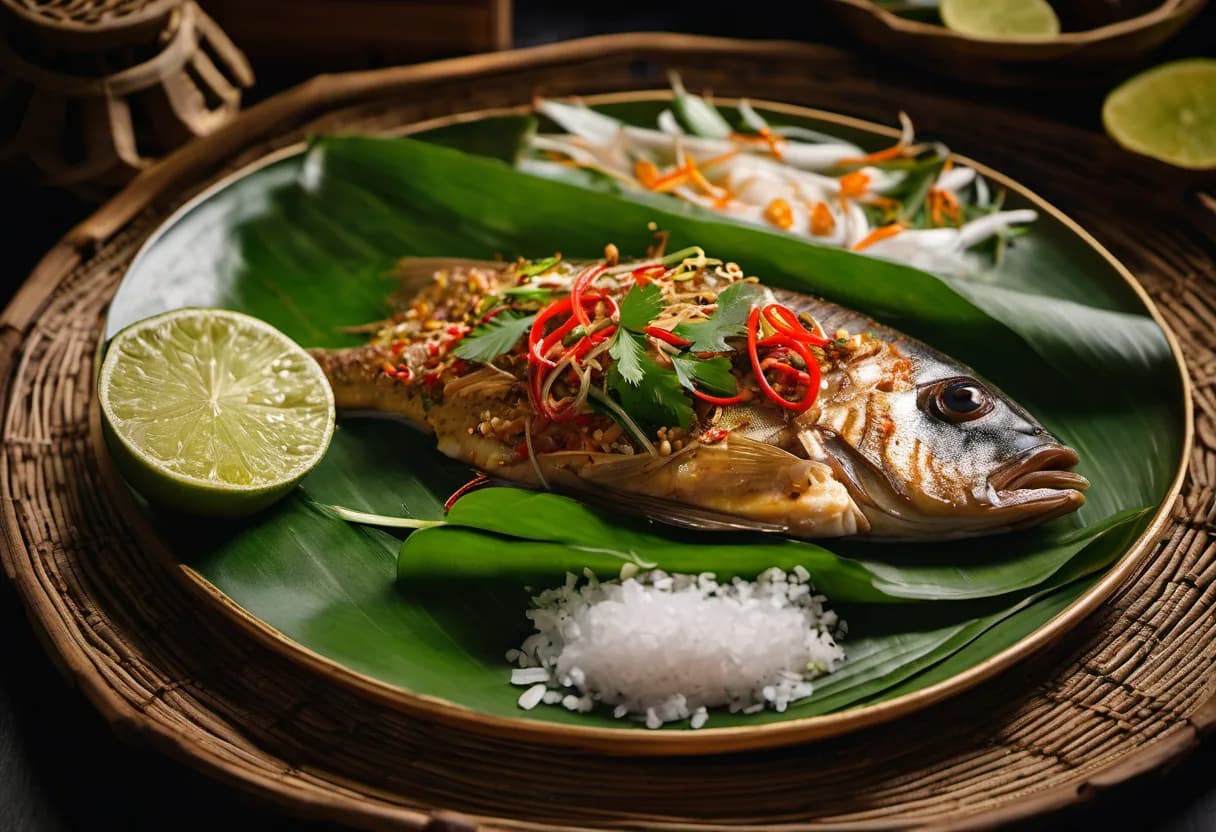
Pla Pao is Thai salt-crusted grilled fish — a whole fish packed in rock salt and lemongrass, grilled slowly over charcoal until the flesh is steamed inside its salt shell and served with a spicy green herb dipping sauce (nam jim seafood).
Cultural Origin
Pla pao is whole salt-crusted grilled fish, most often tilapia or snakehead, packed with lemongrass and kaffir lime leaf and grilled over charcoal. The technique is associated with riverine and Isaan cooking, where freshwater fish are abundant, but is now sold at roadside seafood stalls nationwide. It is served with a sweet-tart-spicy nam jim seafood and fresh herbs and lettuce.
Regional Variants
| Region | How it differs |
|---|---|
| Isaan | Isaan-style pla pao uses freshwater fish, more lemongrass stuffing, and is paired with sticky rice and jaew. |
| Central | Central roadside versions are often farmed tilapia, salt-crusted and served with seafood nam jim and herbs. |
| Southern | Southern versions use sea fish and a hotter, more turmeric-tinged dipping sauce. |
Allergens & Sensitivities
Key Ingredients
- whole fish (tilapia or sea bass)
- rock salt
- lemongrass
- kaffir lime leaves
- nam jim seafood sauce
Taste profile
- Salty
- fish sauce, soy, shrimp paste
- Sweet
- palm sugar, coconut
- Sour
- lime, tamarind, fermentation
- Umami
- dried shrimp, fermented pastes, stock
The fish itself is mild and only lightly seasoned by the salt crust; nearly all the flavour and heat comes from dunking each bite in the sharp, herbal nam jim seafood sauce rather than from the fish alone.
How Pla Pao Is Made
- 1
Stuffing
The cavity of a whole fish is packed with lemongrass stalks and kaffir lime leaves.
- 2
Salt crust
Coarse rock salt is packed thickly over the skin, sometimes mixed with a little egg white or flour to help it set firm.
- 3
Grilling
The fish is grilled slowly over charcoal, turned occasionally, until the salt crust hardens and the flesh inside steams through.
- 4
Cracking open
The hardened salt shell is cracked and peeled away at the table, taking most of the skin with it.
- 5
Sauce
A separate nam jim seafood sauce — lime juice, fish sauce, garlic, chilli and coriander root — is served alongside for dipping.
When It’s Eaten
A shared dish for a proper sit-down meal rather than a quick bite, most often ordered at riverside or seafood restaurants alongside rice, herbs and other dishes.
How to Order It
- ปลาเผาปลากะพง
- pla pao pla kapong
- grilled fish made with sea bass
- ขอน้ำจิ้มซีฟู้ดเพิ่ม
- khor nam jim seafood phoem
- extra seafood dipping sauce, please
What people get wrong
Worrying the fish will taste oversalted because of the visible salt crust; the crust seals in moisture during cooking rather than seasoning the flesh directly, so the fish underneath is mild.
Where to Try It
Riverside restaurants, fresh markets with charcoal grills, and seafood stalls nationwide — particularly popular along rivers and coasts.
Tips
- The salt crust is removed tableside — the fish inside is perfectly seasoned without being salty.
- Nam jim seafood (the green dipping sauce) is essential — a good one has lime, coriander, garlic, and chilli in balance.