Pad Woon Sen
ผัดวุ้นเส้น
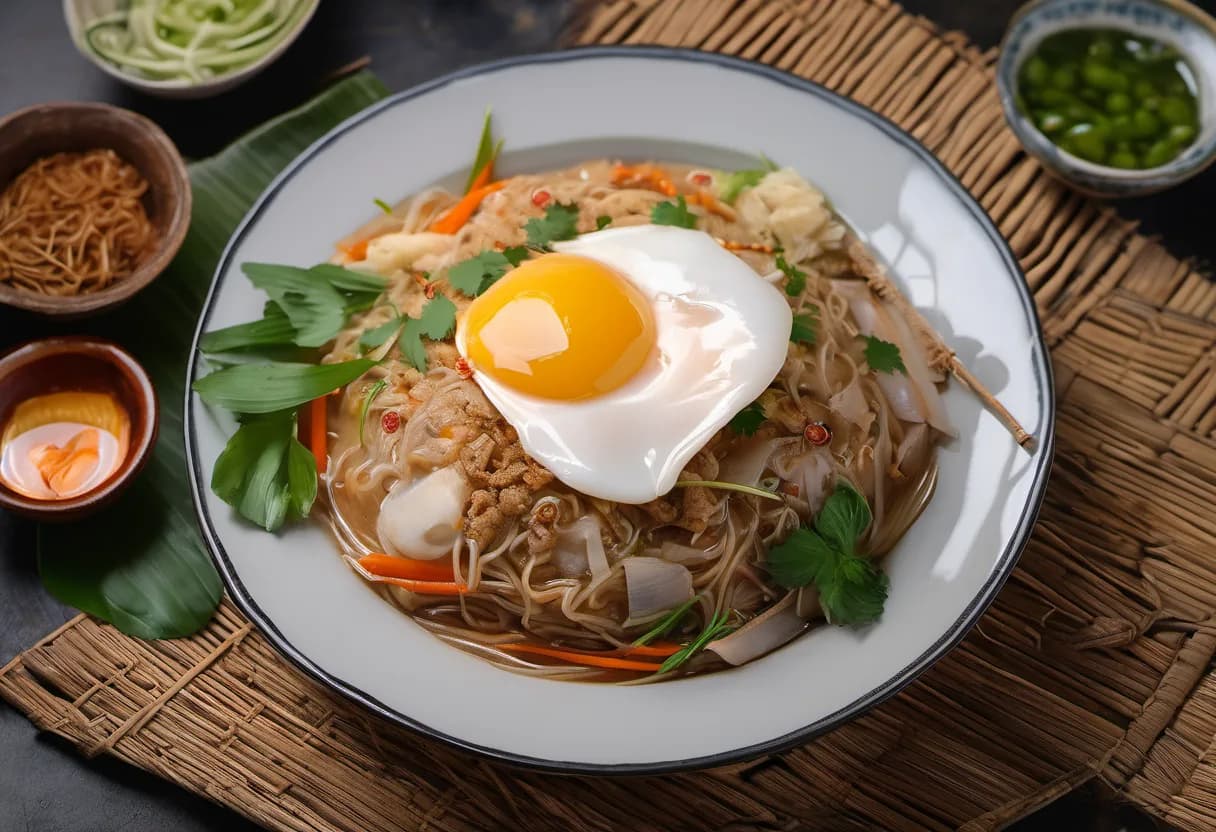
Pad Woon Sen is a light stir-fry of glass noodles (bean thread noodles) with egg, vegetables, and pork or chicken — milder and less oily than Pad Thai, making it a great choice for those seeking something lighter.
Cultural Origin
Pad Woon Sen is a Chinese-Thai stir-fry built around glass noodles made from mung bean starch, a technique brought by Teochew and Hokkien migrants in the 19th and early 20th centuries. It became a household staple across Central Thailand and is now found nationwide in home kitchens and rice-and-curry shops.
Regional Variants
| Region | How it differs |
|---|---|
| Central | The standard version uses egg, pork, and a soy-oyster sauce base with cabbage and tomato. |
| Southern | Southern cooks often add more chili and seafood, particularly shrimp or squid. |
Allergens & Sensitivities
Key Ingredients
- glass noodles
- egg
- carrot
- spring onion
- pork or chicken
Taste profile
- Salty
- fish sauce, soy, shrimp paste
- Sweet
- palm sugar, coconut
- Sour
- lime, tamarind, fermentation
- Umami
- dried shrimp, fermented pastes, stock
The mildest and lightest profile of the stir-fried noodles here — glass noodles carry almost no flavour of their own, so the dish tastes primarily of whatever sauce and vegetables surround them, with none of the wok-char intensity of pad see ew or kua gai.
How Pad Woon Sen Is Made
- 1
Soaking
Dried glass noodles are soaked in room-temperature water until pliable and translucent, rather than boiled, so they don't turn mushy before they even reach the wok.
- 2
Aromatics
Garlic is fried briefly in oil to build a base flavour before anything else goes into the wok.
- 3
Protein and vegetables
Pork or chicken is cooked through first, followed by carrot, spring onion and sometimes cabbage or tomato, kept moving so nothing overcooks.
- 4
Noodles and egg
The soaked noodles are added along with a cracked egg, tossed together so the noodles absorb the egg and sauce rather than sitting in a pool of it.
- 5
Sauce
A light soy-oyster sauce mixture is added at the end, coating the noodles without the darker, heavier finish of dishes made with dark soy.
When It’s Eaten
A lighter option chosen specifically as an alternative to oilier stir-fries, often ordered by diners wanting something gentler on the stomach; it appears on home-kitchen and rice-and-curry-shop menus as much as on street-food carts.
How to Order It
- ผัดวุ้นเส้น
- pad woon sen
- one plate of Pad Woon Sen
- ไม่ใส่ไข่
- mai sai khai
- no egg
- ใส่ผักเยอะ
- sai phak yoe
- extra vegetables
What people get wrong
Boiling the dried noodles like pasta — glass noodles only need a soak in cool or lukewarm water, and boiling them turns the strands gluey and overly soft before they even reach the wok.
Where to Try It
Thai rice-and-curry shops and street stalls throughout the country.
Tips
- Soak glass noodles in room-temperature water (not boiling) for 10 minutes before cooking — they absorb all the sauce flavour beautifully.