Pad Thai
ผัดไทย
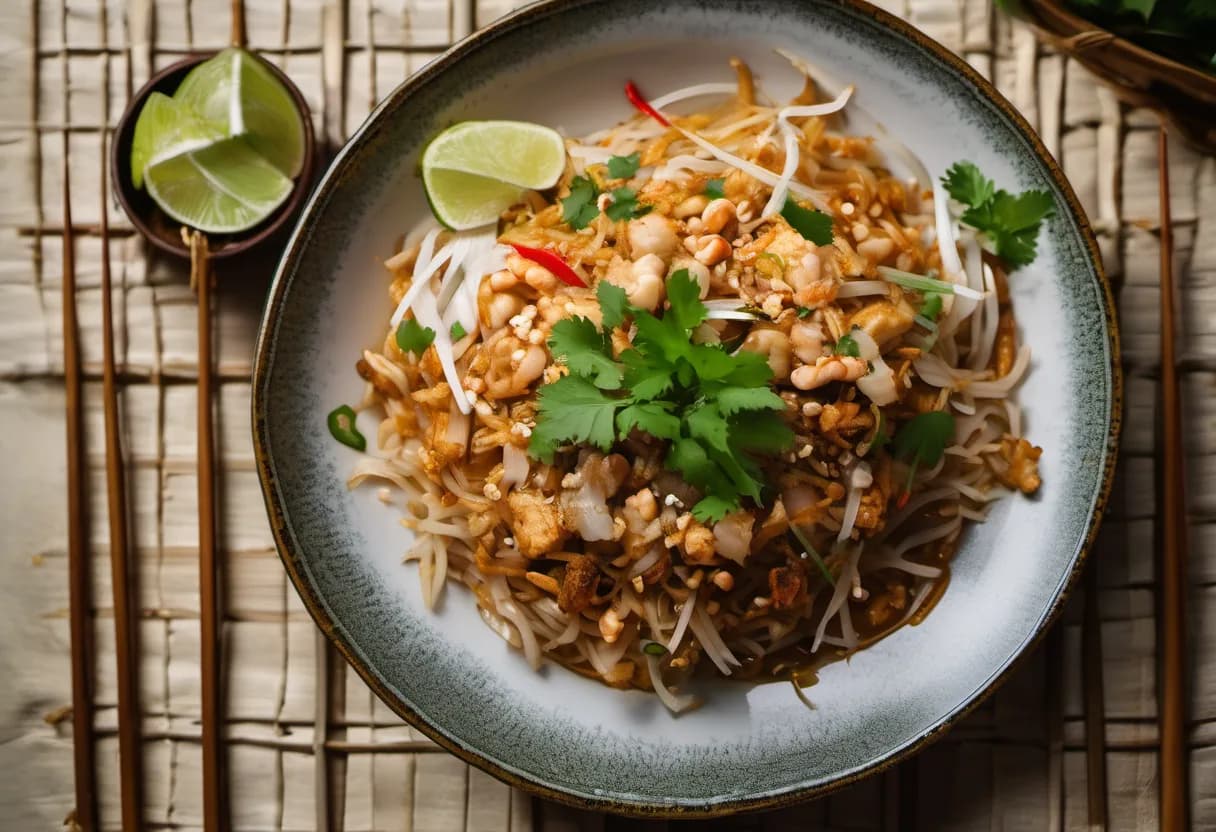
Pad Thai is Thailand's most iconic stir-fried noodle dish, tossed with eggs, bean sprouts, and a tangy tamarind-based sauce. Found at virtually every street food stall, it's the perfect introduction to Thai cuisine.
Cultural Origin
Pad Thai was popularised in Bangkok during the late 1930s and early 1940s as part of Prime Minister Plaek Phibunsongkhram's nation-building campaign, which promoted a national noodle dish to reduce rice consumption and build a Thai culinary identity. Its technique and rice-noodle base draw heavily on Chinese-Teochew stir-fried noodle traditions, fused with Thai seasonings of tamarind, palm sugar and fish sauce. The dish became a street-food staple from Bangkok outward and remains the country's most internationally recognised noodle.
Regional Variants
| Region | How it differs |
|---|---|
| Central | The Bangkok and Ayutthaya version is the canonical balance of tamarind, palm sugar and fish sauce with dried shrimp, tofu and chives. |
| Southern | Southern cooks often add fresh crab meat or local shrimp and lean sweeter, sometimes finishing with a wedge of pomelo instead of lime. |
| Northern | Northern shops tend to make a milder, less tangy version, sometimes substituting soy for fish sauce and using local sai ua sausage. |
Allergens & Sensitivities
Key Ingredients
- rice noodles
- eggs
- bean sprouts
- tamarind paste
- dried shrimp
Taste profile
- Salty
- fish sauce, soy, shrimp paste
- Sweet
- palm sugar, coconut
- Sour
- lime, tamarind, fermentation
- Umami
- dried shrimp, fermented pastes, stock
Well-made pad thai holds its three main flavours in near balance rather than letting one dominate, and the noodles keep a slight springiness rather than turning soft; the wok's heat leaves faint charring on the egg and noodle edges that a home stove rarely produces.
How Pad Thai Is Made
- 1
Softening the noodles
Dried rice noodles are soaked in room-temperature water until pliable but still firm, since they finish cooking in the wok and would turn mushy if left to fully hydrate beforehand.
- 2
Mixing the sauce
Tamarind pulp, palm sugar and fish sauce are combined ahead of time so the balance can be added in one motion rather than adjusted while the wok is already hot.
- 3
Starting the wok
Garlic and dried shrimp go into hot oil first, then beaten egg is poured in and pushed to one side to set before the noodles join it.
- 4
Tossing with sauce
The noodles and premixed sauce are tossed together over high heat until the liquid is absorbed rather than pooling at the base of the pan.
- 5
Finishing with sprouts and chives
Bean sprouts and chives are stirred through only in the final seconds so they soften slightly while keeping their crunch.
When It’s Eaten
Sold from morning through late evening as a single-plate meal rather than a shared dish, most often bought for a quick lunch rather than served as part of a multi-dish spread the way curries and stir-fries are.
How to Order It
- ขอผัดไทยหนึ่งที่
- kor pad thai neung thi
- One pad thai, please.
- ขอผัดไทยเจหนึ่งที่
- kor pad thai jay neung thi
- One vegan pad thai, please (no egg or shrimp).
- ไม่ใส่ถั่ว
- mai sai tua
- No peanuts.
What people get wrong
First-timers often expect the sauce to taste as sweet as bottled pad thai kits sold abroad; a stall-made version leans towards sour and salty, with sweetness in a supporting role, so it can taste more savoury than expected on the first bite.
Where to Try It
Any Bangkok street stall or night market — Thip Samai on Maharaj Road is legendary.
Tips
- Ask for it 'jay' (เจ) for a vegan version without egg or shrimp.
- Squeeze fresh lime and add chilli flakes from the condiment rack at your table.