Pad See Ew Talay
ผัดซีอิ๊วทะเล
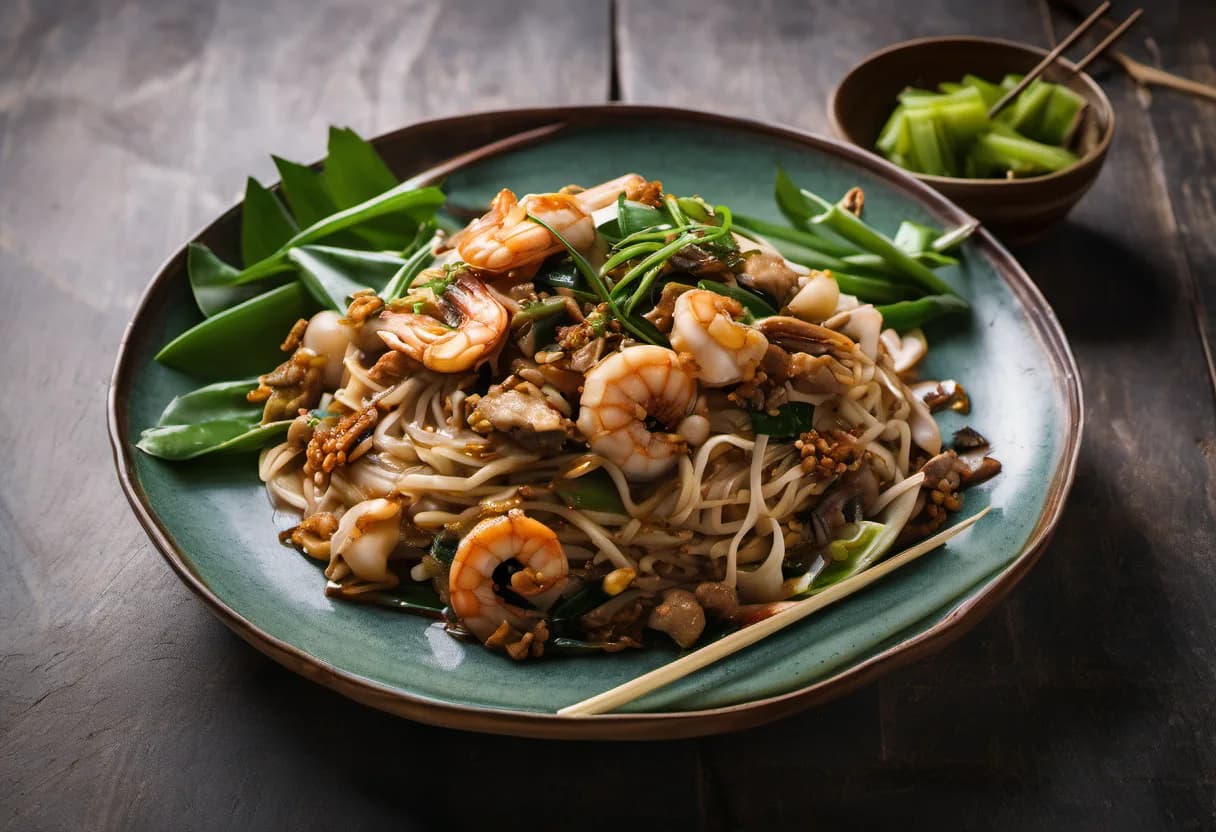
Pad See Ew Talay is the seafood version of Thailand's beloved wide-noodle stir-fry — prawns, squid, and mussels tossed with wide rice noodles, dark soy sauce, egg, and Chinese broccoli over a fierce wok flame.
Cultural Origin
Pad see ew talay is the seafood version of pad see ew, common in Bangkok and southern Thai shophouses where fresh prawns, squid and mussels are stir-fried with wide rice noodles, egg, Chinese broccoli and sweet dark soy. The base technique is the same Teochew-Chinese-derived stir-fry as standard pad see ew, simply swapped to seafood. It is most commonly served at Chinese-Thai noodle shops along the Gulf coast.
Regional Variants
| Region | How it differs |
|---|---|
| Central | The Bangkok version uses mixed seafood with sen yai, sweet dark soy, egg and gai lan in a wok-charred stir-fry. |
| Southern | Southern coastal versions use more local seafood and are often spicier, with extra chili added at the wok. |
Allergens & Sensitivities
Key Ingredients
- wide rice noodles
- mixed seafood
- dark soy sauce
- Chinese broccoli
- egg
Taste profile
- Salty
- fish sauce, soy, shrimp paste
- Sweet
- palm sugar, coconut
- Sour
- lime, tamarind, fermentation
- Umami
- dried shrimp, fermented pastes, stock
Close to standard pad see ew's soy-and-char profile but pushed further into savouriness by the seafood, whose natural brininess reads as an extra layer of umami rather than the meaty richness of the pork version.
How Pad See Ew Talay Is Made
- 1
Noodle choice
Wide rice noodles (sen yai) are used exactly as in the standard version, chosen for the surface area that catches the wok char.
- 2
Seafood prep
Prawns, squid and mussels or cockles are cleaned and portioned so each piece cooks through in the brief time it spends in the hot wok, since overcooked seafood turns rubbery fast.
- 3
Searing
The seafood is seared first over high heat and removed, preventing it from stewing in its own liquid while the rest of the dish comes together.
- 4
Egg and noodles
An egg is set in the wok, then the noodles and Chinese broccoli are added and tossed hard against the hot metal to pick up char.
- 5
Recombining
The seared seafood is returned to the wok only in the final moments with the dark soy sauce, just long enough to reheat and coat without drying out.
When It’s Eaten
Ordered as a heartier, pricier alternative to standard pad see ew, typically at coastal towns or seafood-focused noodle stalls rather than everyday inland shophouses, and eaten as a full plate on its own.
How to Order It
- ผัดซีอิ๊วทะเล
- pad see ew talay
- Pad See Ew Talay, please
- ไม่ใส่กุ้ง
- mai sai goong
- no prawns
- เผ็ดน้อย
- phet noi
- a little spicy
What people get wrong
Assuming it is milder because it looks similar to the standard pork version — the seafood variant is sometimes finished with extra chilli at the wok, so it is worth confirming spice level before ordering it as if it were the classic dish.
Where to Try It
Seafood noodle stalls and Thai restaurants near coastal areas.
Tips
- The wok char (hei) is everything — order from a stall with a powerful gas flame for the best smoky flavour.