Pad See Ew
ผัดซีอิ๊ว
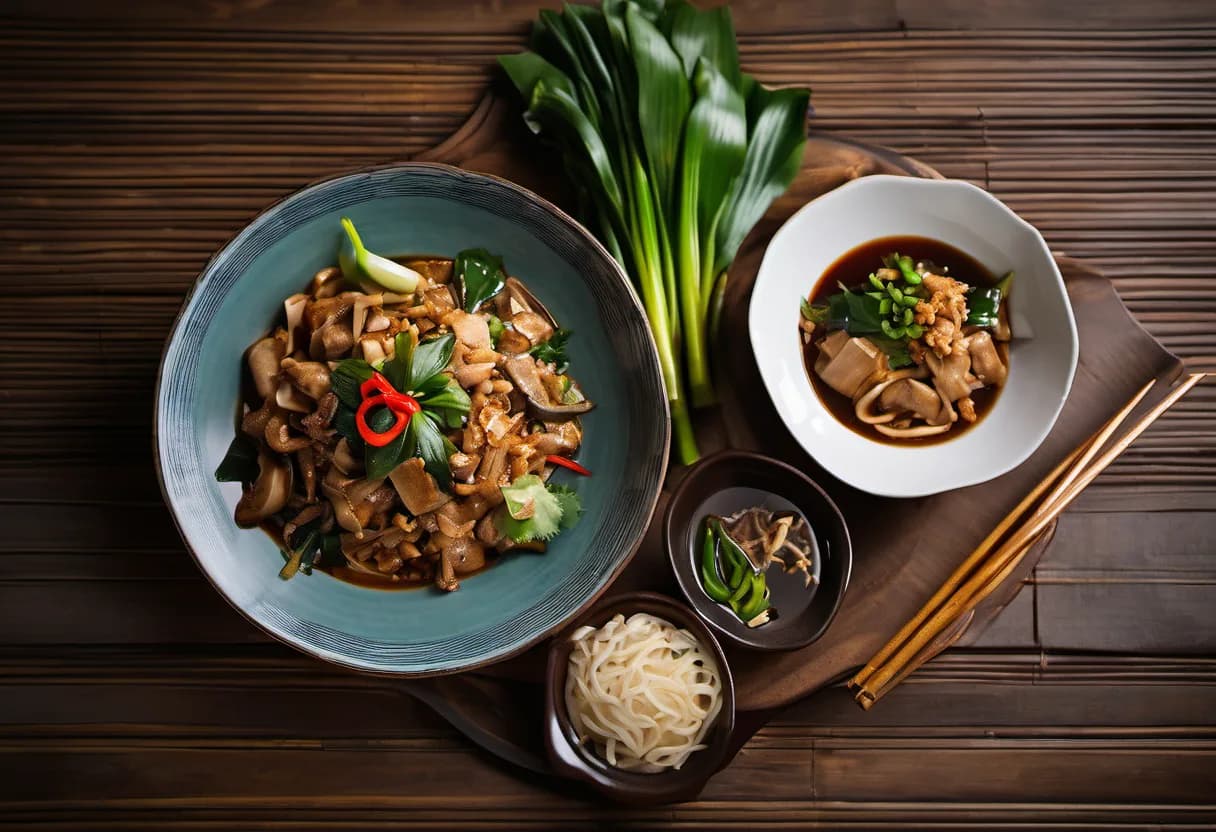
Pad See Ew is a satisfying stir-fried noodle dish made with wide rice noodles, egg, Chinese broccoli, and dark soy sauce. Milder than Pad Thai, it has a beautiful smoky wok-char flavour from high-heat cooking.
Cultural Origin
Pad see ew is a Thai-Chinese stir-fried wide rice noodle dish whose name literally means 'stir-fried with soy sauce', reflecting its Teochew Chinese origins. It was brought to Thailand by Chinese immigrants in the 19th and early 20th centuries and adapted with Thai dark sweet soy (si-iew dam wan), Chinese broccoli (gai lan) and a hit of chili vinegar at the table. It is now a Bangkok shophouse and street-food staple eaten across the country.
Regional Variants
| Region | How it differs |
|---|---|
| Central | The Bangkok standard uses sen yai noodles, dark sweet soy, egg, gai lan and pork or chicken, finished with a wok-charred smokiness. |
| Southern | Southern cooks sometimes add seafood and more chili, producing a hotter, brinier version. |
Allergens & Sensitivities
Key Ingredients
- wide rice noodles
- dark soy sauce
- egg
- Chinese broccoli
- pork or chicken
Taste profile
- Salty
- fish sauce, soy, shrimp paste
- Sweet
- palm sugar, coconut
- Sour
- lime, tamarind, fermentation
- Umami
- dried shrimp, fermented pastes, stock
Dominated by caramelised dark soy and wok smoke rather than any single strong flavour; the char itself reads as a taste, with little sweetness and no real sourness unless chilli vinegar is added at the table.
How Pad See Ew Is Made
- 1
Noodle choice
Fresh wide rice noodles (sen yai) are used rather than dried — they need to be pliable enough to fry without shattering while still holding a slight chew.
- 2
Wok preparation
The wok is heated until almost smoking before oil goes in; without this heat the noodles cannot develop the char (wok hei) that defines the dish.
- 3
Protein and egg
Sliced pork or chicken is seared first, then pushed aside so a cracked egg can set directly in the wok before everything is combined.
- 4
Noodles and greens go in
Noodles and Chinese broccoli are added last and tossed hard and briefly over the highest flame — this is a dry stir-fry, not a sauced one, so contact time with the wok surface matters more than liquid.
- 5
Seasoning
Dark soy sauce is added in the final seconds, coating rather than stewing the noodles, so the sauce caramelises onto the surface instead of pooling underneath.
When It’s Eaten
An any-time dish — sold from mid-morning through late-night stalls and eaten as a standalone lunch or dinner rather than a shared plate, usually with the chilli-vinegar condiment set added at the table rather than during cooking.
How to Order It
- ผัดซีอิ๊ว
- pad see ew
- one plate of Pad See Ew
- ไม่ใส่ผงชูรส
- mai sai phong choo rot
- no MSG
- ไม่ใส่ถั่วงอก
- mai sai thua ngok
- no bean sprouts
What people get wrong
Ordering it expecting the tamarind sweet-sour flavour of pad thai — pad see ew is soy-based and closer to savoury-smoky than sweet, and a diner who wants sourness needs to add the table vinegar themselves.
Where to Try It
Street food stalls and noodle shops — look for a cook with a powerful wok flame for the best char.
Tips
- The 'wok hei' (smoky char from high heat) is what separates great Pad See Ew from mediocre — street stalls with huge flames do it best.
- Add a splash of white vinegar with chilli from the condiment rack for extra depth.