Mango Sticky Rice
ข้าวเหนียวมะม่วง
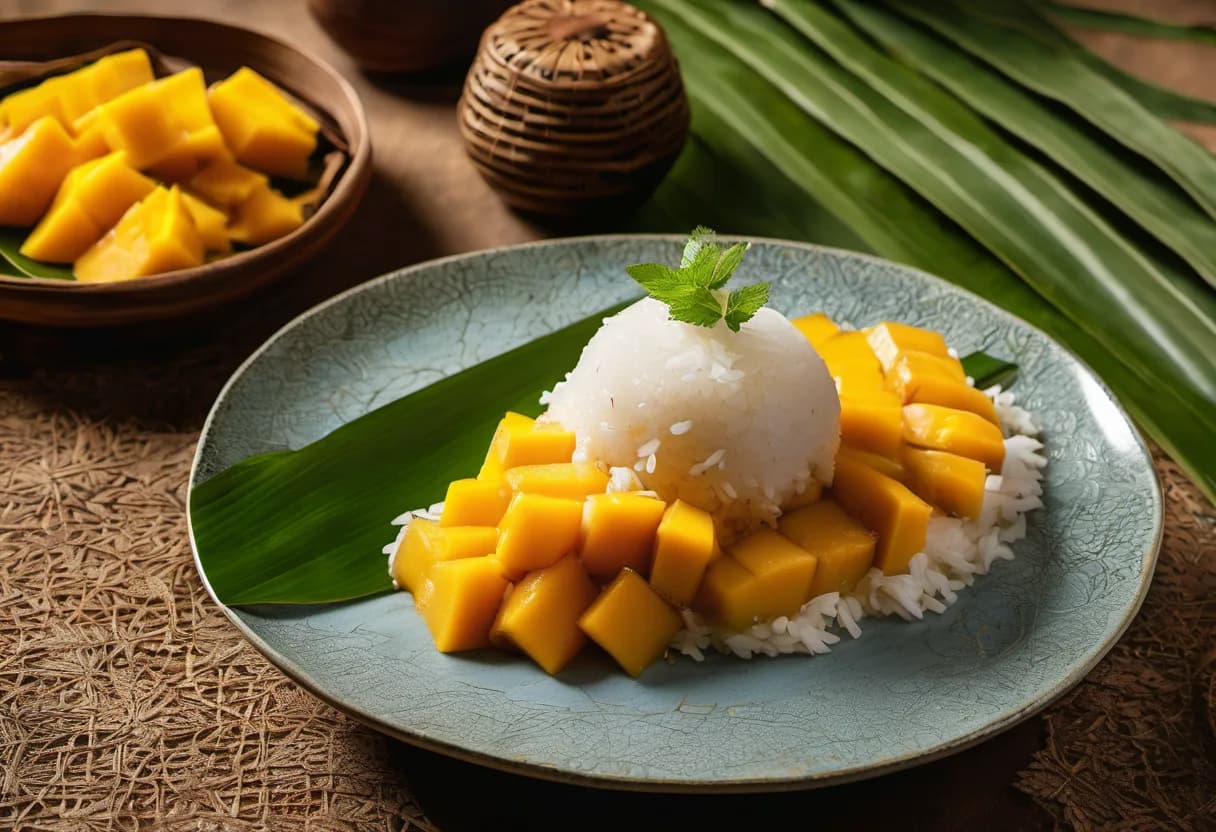
Mango Sticky Rice (Khao Niao Mamuang) is Thailand's most beloved dessert — glutinous rice steamed in sweet coconut milk, served alongside ripe Nam Dok Mai mango. It's seasonal (April–June) but available year-round in tourist areas.
Cultural Origin
Khao niew mamuang, mango sticky rice, is a Central Thai dessert tied to the short hot-season window when nam dok mai and ok rong mangoes ripen, traditionally April through June. It pairs glutinous rice — a staple of the north and northeast — with sweetened coconut cream and ripe mango from the central plains, and likely took its modern form in the late 19th to early 20th century. It is now the country's most internationally recognised dessert.
Allergens & Sensitivities
Key Ingredients
- glutinous rice
- coconut milk
- palm sugar
- ripe mango
- toasted sesame seeds
Taste profile
- Salty
- fish sauce, soy, shrimp paste
- Sweet
- palm sugar, coconut
- Sour
- lime, tamarind, fermentation
- Umami
- dried shrimp, fermented pastes, stock
The rice should still have a slight bite at the centre of each grain, and the coconut cream poured over the top is salted enough to taste on its own — that salt line is what keeps the dish from reading as plain sugar.
How Mango Sticky Rice Is Made
- 1
Soaking
Glutinous rice is soaked for several hours or overnight so the grains swell before steaming.
- 2
Steaming
The soaked rice is steamed over water, not boiled, so it holds its shape as separate grains rather than turning to porridge.
- 3
Seasoning
Warm coconut milk mixed with sugar and salt is stirred through the hot rice and left to absorb, which is what makes the rice glossy rather than merely wet.
- 4
Resting
The seasoned rice is set aside so the coconut milk fully soaks in before serving; rice sold immediately after mixing tastes thinner.
- 5
Finishing
A thicker, saltier coconut cream is poured over the top just before serving, and toasted mung beans or sesame are scattered on for crunch.
When It’s Eaten
Eaten as a stand-alone dessert rather than after a meal, most often in the afternoon or evening during mango season; it is heavy enough that Thais rarely order it straight after a large meal.
How to Order It
- ขอข้าวเหนียวมะม่วงหนึ่งที่
- kor khao niao mamuang neung thi
- One mango sticky rice, please
- มะม่วงหวานไหม
- mamuang wan mai
- Is the mango sweet?
What people get wrong
Ordering it out of season and getting an unripe, fibrous mango — the dish depends on the mango being ripe enough to eat with a spoon.
Where to Try It
Street dessert vendors across Bangkok and Chiang Mai — Or Tor Kor Market in Bangkok is famous for it.
Tips
- Eat it in April and May when Nam Dok Mai mangoes are at peak ripeness and sweetness.
- The coconut cream poured on top should be slightly salty — this contrast with sweet rice is essential.