Kuay Teow Kua Gai
ก๋วยเตี๋ยวคั่วไก่
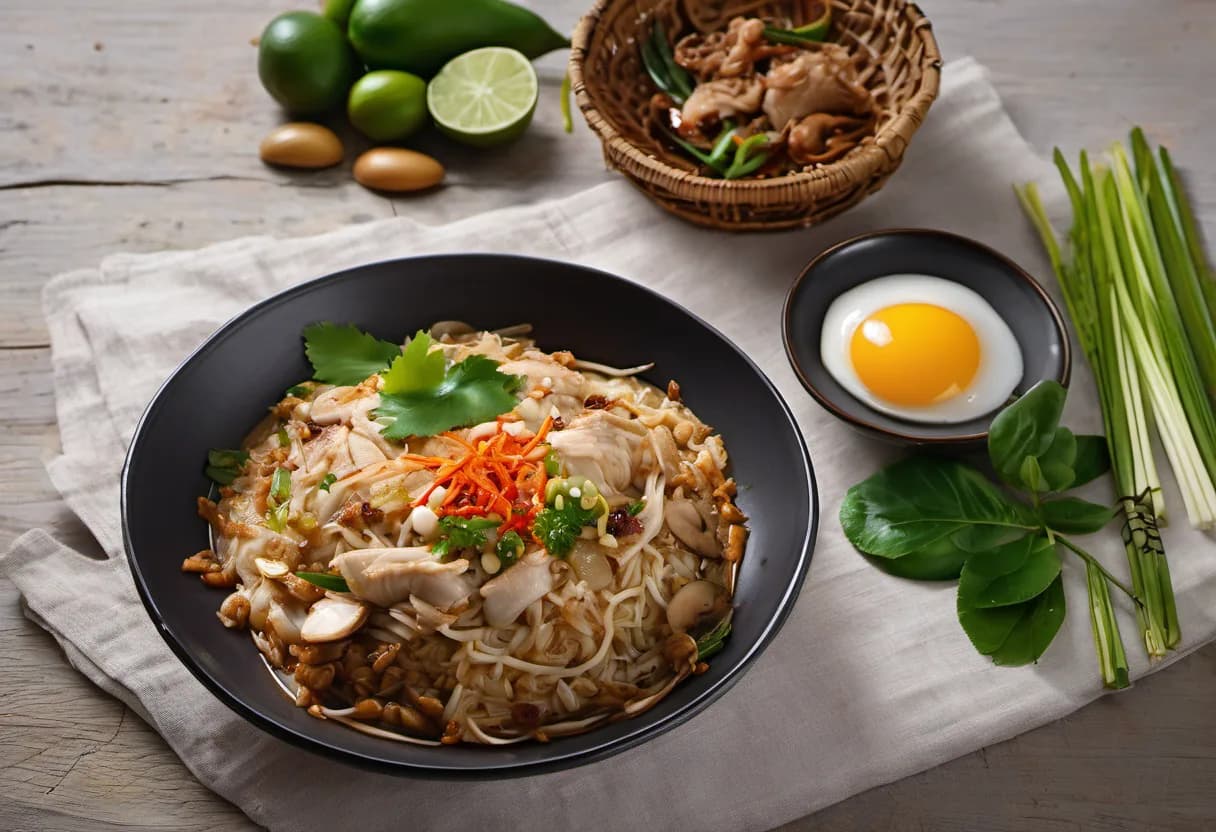
Kuay Teow Kua Gai is a dry-fried noodle dish — wide rice noodles fried without water or stock with chicken and egg until deeply charred, creating an intensely smoky, almost caramelised flavour.
Cultural Origin
Kuay Teow Kua Gai is a Chinese-Thai dish from Bangkok's old Chinatown, where Teochew cooks dry-fried wide rice noodles with chicken and egg over high heat in a flat pan. It dates to the early 20th century and remains a specialty of long-established street vendors around Yaowarat and Charoen Krung.
Allergens & Sensitivities
Key Ingredients
- wide rice noodles
- chicken
- egg
- squid ink
- garlic
Taste profile
- Salty
- fish sauce, soy, shrimp paste
- Sweet
- palm sugar, coconut
- Sour
- lime, tamarind, fermentation
- Umami
- dried shrimp, fermented pastes, stock
As savoury and smoky as boat noodles but dry rather than brothy — the char from cooking at extreme heat without liquid reads almost as a bitter-savoury note, with essentially no sweetness or sourness to soften it.
How Kuay Teow Kua Gai Is Made
- 1
Dry frying
Wide rice noodles are fried in a flat pan or wok with no added water or stock, the defining technique that separates kua gai from every soup-based noodle dish on this list.
- 2
High heat
The pan is kept extremely hot throughout, deliberately charring the noodles slightly rather than avoiding it — the char is the point, not a mistake.
- 3
Chicken and egg
Sliced chicken and egg are cooked directly among the noodles rather than separately, so they pick up the same smoky char.
- 4
Seasoning
Soy sauce caramelises against the hot pan surface, and some versions use a touch of squid ink, producing the dish's characteristic dark colour.
- 5
Finishing
Garlic and a scattering of coriander or spring onion are added at the very end, since anything added earlier would burn at the pan's cooking temperature.
When It’s Eaten
A specialist order rather than an everyday one — found at particular Bangkok noodle stalls known for the technique, eaten as a standalone plate by diners specifically seeking out its charred flavour rather than as a default noodle choice.
How to Order It
- ก๋วยเตี๋ยวคั่วไก่
- kuay teow kua gai
- one plate of Kuay Teow Kua Gai
- ไม่ใส่กระเทียม
- mai sai krathiam
- no garlic
- ไม่เผ็ด
- mai phet
- not spicy
What people get wrong
Sending it back or assuming it's overcooked because of the dark, slightly blackened appearance — the char is intentional and central to the dish's flavour, not a sign the noodles were left too long on the heat.
Where to Try It
Bangkok noodle specialists — look for stalls with blackened woks and experienced cooks.
Tips
- The signature dark colour and smoky flavour come from cooking at extreme heat until the noodles char slightly — this is intentional, not burnt.