Khao Pad
ข้าวผัด
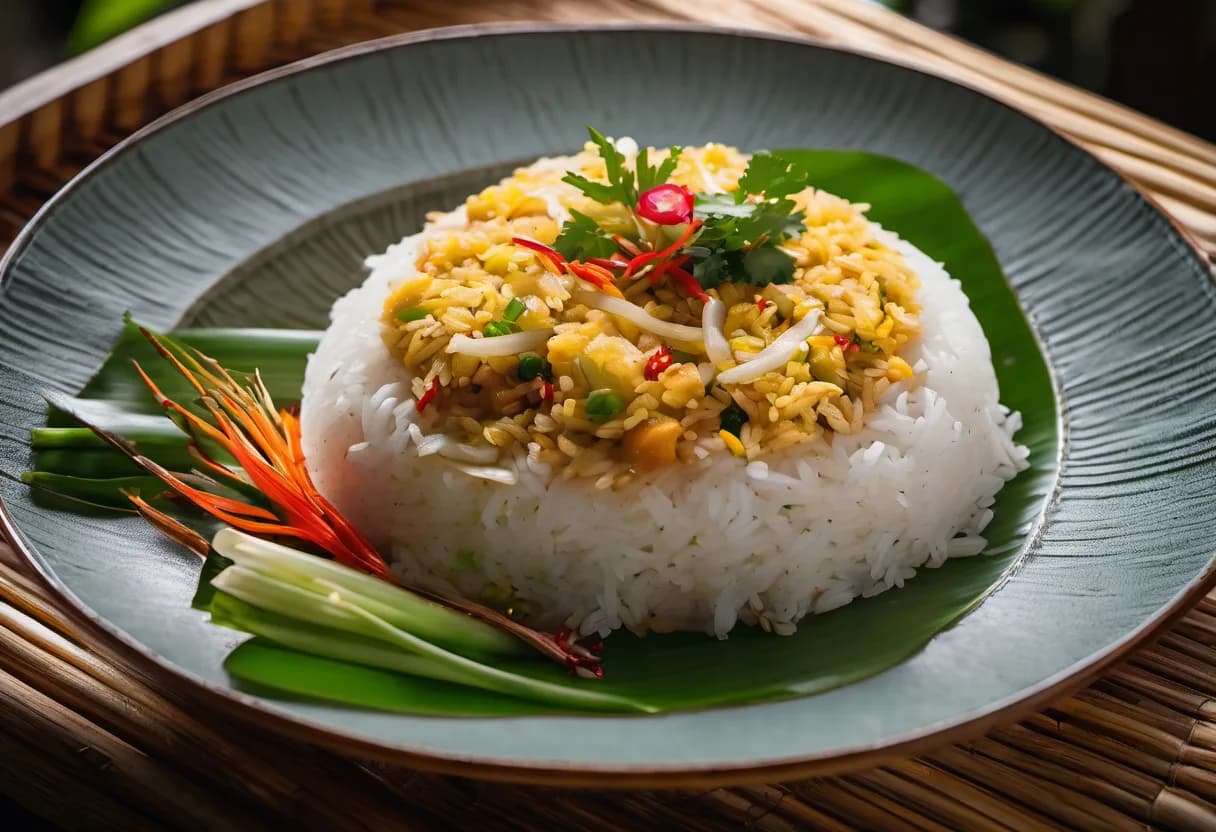
Khao Pad is Thai fried rice, wok-tossed with egg, spring onions, and your choice of protein. Simple, fast, and deeply satisfying, it's a staple on every Thai menu and the perfect dish when you want something familiar but delicious.
Cultural Origin
Khao pad, Thai fried rice, is a direct descendant of Chinese fried-rice traditions brought by Teochew and Hokkien immigrants who settled in Bangkok and other ports from the 18th century onward. The Thai adaptation lightens the seasoning to fish sauce, white pepper and a squeeze of lime, and is almost always served with cucumber slices and a wedge of lime. It became a household and shophouse staple across the country and is now eaten everywhere from market stalls to royal canteens.
Regional Variants
| Region | How it differs |
|---|---|
| Central | The Bangkok version is lightly seasoned with fish sauce and soy, often with crab, shrimp or Chinese sausage and served with cucumber and lime. |
| Southern | Southern khao pad is sometimes coloured with turmeric and includes more chili, prawns or salted fish. |
| Isaan | Isaan-style fried rice is often made with leftover sticky rice and seasoned with pla ra or nam prik, giving it a funkier note. |
Allergens & Sensitivities
Key Ingredients
- jasmine rice
- eggs
- spring onions
- soy sauce
- white pepper
Taste profile
- Salty
- fish sauce, soy, shrimp paste
- Sweet
- palm sugar, coconut
- Sour
- lime, tamarind, fermentation
- Umami
- dried shrimp, fermented pastes, stock
Light and dry rather than saucy; the wok's high heat gives a faint smokiness under the soy and white pepper, and the lime wedge on the side adds brightness if squeezed over just before eating.
How Khao Pad Is Made
- 1
Cold rice
Day-old jasmine rice is used straight from the fridge — its dried-out, separated grains fry without turning gluey, unlike freshly cooked rice.
- 2
High heat
The wok is heated until nearly smoking before oil, garlic and egg go in, cooked fast to build the faint charred aroma associated with good fried rice.
- 3
Protein and rice
The chosen protein is added first to cook through, then the rice is tossed in and broken up against the hot wok surface.
- 4
Seasoning
Soy sauce and a pinch of sugar are added around the edge of the wok rather than poured directly onto the rice, so they caramelise slightly before being tossed through.
- 5
Finish and plate
Spring onion goes in at the very end to keep some bite, and the rice is plated with cucumber slices and a lime wedge.
When It’s Eaten
Eaten at any time of day — lunch, dinner, or a late-night meal after drinking — usually on its own rather than shared, though a fried egg or extra chilli fish sauce is often added at the table.
How to Order It
- ข้าวผัดกุ้ง
- khao pad goong
- fried rice with shrimp
- ข้าวผัดปู
- khao pad poo
- fried rice with crab
What people get wrong
Expecting it to taste like Chinese-restaurant fried rice back home; Thai versions are seasoned with fish sauce and white pepper rather than soy sauce and sesame oil, and are drier, with less oil.
Where to Try It
Every restaurant in Thailand serves Khao Pad — street stalls and late-night spots do it especially well.
Tips
- Day-old rice produces far better fried rice than freshly cooked — restaurants always use it.
- Order it with crab (khao pad poo) for a Thai coastal treat.