Khao Lam
ข้าวหลาม
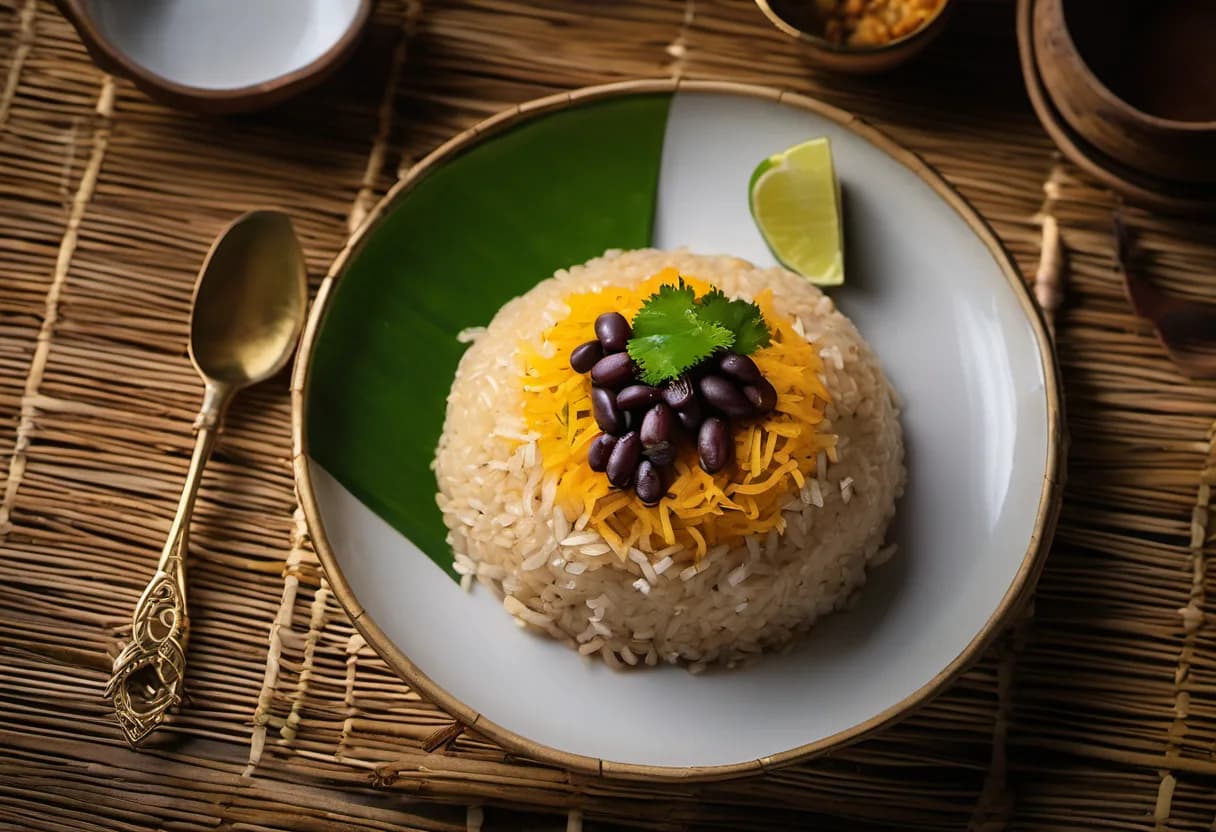
Khao Lam is a Thai dessert of glutinous rice mixed with coconut milk, black beans, and palm sugar cooked inside a green bamboo tube over charcoal — absorbing a subtle smoky, woody fragrance.
Cultural Origin
Khao Lam is a traditional Thai sticky-rice dessert cooked inside a hollow bamboo tube over charcoal, with a long history across Thailand, Laos, and northern Vietnam. The bamboo is roasted until the rice and coconut milk inside steam into a fragrant, slightly smoky cake, and it remains a roadside specialty in regions like Nong Mon in Chonburi.
Regional Variants
| Region | How it differs |
|---|---|
| Central | Central versions often use small red beans or black-eyed peas mixed into the coconut sticky rice. |
| Northern | Northern and Lao versions tend to be plainer, leaning on coconut cream and a thicker burnt-bamboo skin. |
Allergens & Sensitivities
Key Ingredients
- glutinous rice
- coconut milk
- black beans
- palm sugar
- bamboo tube
Taste profile
- Salty
- fish sauce, soy, shrimp paste
- Sweet
- palm sugar, coconut
- Sour
- lime, tamarind, fermentation
- Umami
- dried shrimp, fermented pastes, stock
The bamboo leaves a genuine woody, faintly smoky aroma in the rice that no other sticky rice dessert on this list has, and the black beans add a mild earthiness against the sweetness of the coconut milk.
How Khao Lam Is Made
- 1
Preparing the bamboo
Fresh green bamboo tubes are cut to length, cleaned, and left with one end sealed by a natural node.
- 2
Filling
Soaked glutinous rice is mixed with coconut milk, black beans, and palm sugar, then packed into the bamboo tubes, leaving room for the rice to expand.
- 3
Sealing
The open end of each tube is plugged, traditionally with husk or a banana-leaf wad, to keep steam and moisture in.
- 4
Roasting
The filled tubes are stood upright and roasted slowly over charcoal, turned periodically so they cook evenly.
- 5
Checking
Vendors judge doneness by the charring on the outer bamboo and by tapping the tubes.
- 6
Serving
The charred outer layers are split away with a knife just before eating, revealing the rice cylinder underneath.
When It’s Eaten
Sold from roadside stalls rather than restaurants, eaten as a portable snack at any time of day, particularly on journeys through bamboo-growing regions.
How to Order It
- ขอข้าวหลามหนึ่งกระบอก
- kor khao lam neung krabok
- One tube of khao lam, please
- อร่อยไหม
- aroi mai
- Is it good?
What people get wrong
Trying to eat straight from the tube without splitting away the charred outer layers — the blackened bamboo skin needs to be cut off first to reach the clean rice inside.
Where to Try It
Kanchanaburi, Ayutthaya, and northern Thailand markets; sold from roadside vendors in bamboo-growing regions.
Tips
- To eat, split the bamboo tube with a knife and peel away the green outer layers to reveal the fragrant sticky rice cylinder inside.