Kai Jeow
ไข่เจียว
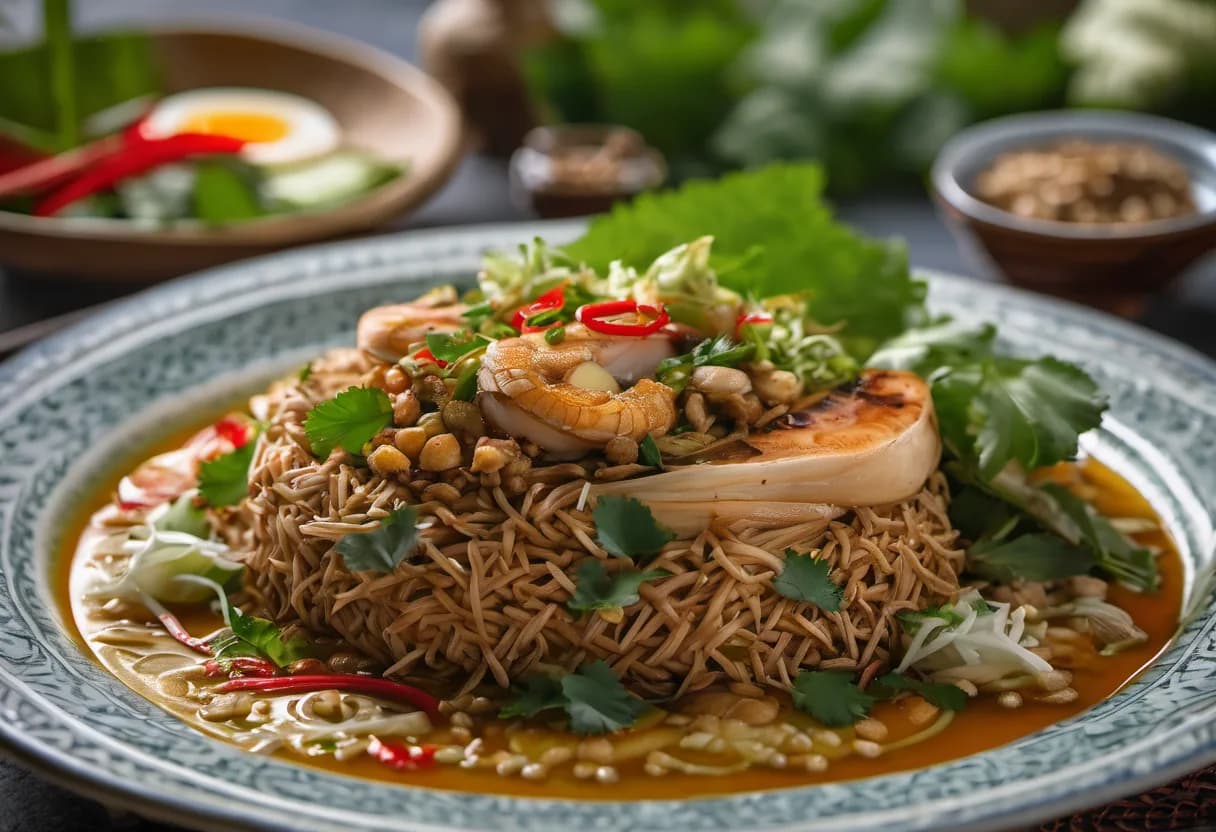
Kai Jeow — Thai omelette — is one of Thailand's most beloved comfort foods: eggs beaten with fish sauce and sometimes garlic or herbs, fried in very hot oil until crispy and puffed at the edges but soft inside, served over rice with sriracha or prik nam pla.
Cultural Origin
Kai jeow is the Thai omelette, a workaday everyday dish cooked in hot oil until puffed and crisp at the edges. It is eaten over rice with sriracha or sweet chili sauce, sometimes with minced pork (kai jeow moo sap) and is a default cheap meal in shophouses and food courts. Its modern form is tied to the spread of cheap oil and gas burners in 20th-century Thai households.
Allergens & Sensitivities
Key Ingredients
- eggs
- fish sauce
- white pepper
- vegetable oil
- jasmine rice
Taste profile
- Salty
- fish sauce, soy, shrimp paste
- Sweet
- palm sugar, coconut
- Sour
- lime, tamarind, fermentation
- Umami
- dried shrimp, fermented pastes, stock
The dominant sensation is texture rather than flavour — a shatteringly crisp, oil-blistered edge giving way to a soft, almost custard-like centre — with fish sauce providing most of the seasoning and little else competing for attention.
How Kai Jeow Is Made
- 1
Beating the eggs
Eggs are beaten with fish sauce and sometimes a splash of water until just combined, without over-whisking, since too much air makes the finished omelette tough rather than tender.
- 2
Heating the oil
A generous amount of oil is heated in a wok until it shimmers, well beyond the amount used for a Western-style omelette, since the technique is closer to shallow-frying than sautéing.
- 3
Pouring in one motion
The egg mixture is poured in all at once from a height, which is what causes it to puff and bubble immediately at the edges.
- 4
Folding and flipping
The edges are folded toward the centre once set, and the omelette is flipped once to crisp the second side without breaking the still-soft middle.
- 5
Serving over rice
It is lifted directly onto a bed of hot jasmine rice while still sizzling, so the residual oil seasons the rice underneath as it rests.
When It’s Eaten
Ordered as a fast, single-plate meal over rice rather than a side dish, common when nothing else on a menu appeals or time is short, and rarely eaten without rice underneath it.
How to Order It
- ขอไข่เจียวหนึ่งที่
- kor kai jeow neung thi
- One Thai omelette, please.
- ขอไข่เจียวหมูสับ
- kor kai jeow moo sap
- Thai omelette with minced pork, please.
What people get wrong
Expecting a folded, gently set omelette like a French one; sending it back as overcooked because the edges are deep golden and crisp misunderstands the dish — that crispness is the entire point.
Where to Try It
Any street food stall, rice shop, or Thai restaurant — it is the definitive fast meal. Look for stalls advertising 'khao kin' (rice dishes).
Tips
- The secret is high heat and generous oil — a good kai jeow is crispy and slightly puffed, not flat and pale.
- Add pork mince or crab meat for a richer version (kai jeow moo sap, kai jeow pu).