Jungle Curry
แกงป่า
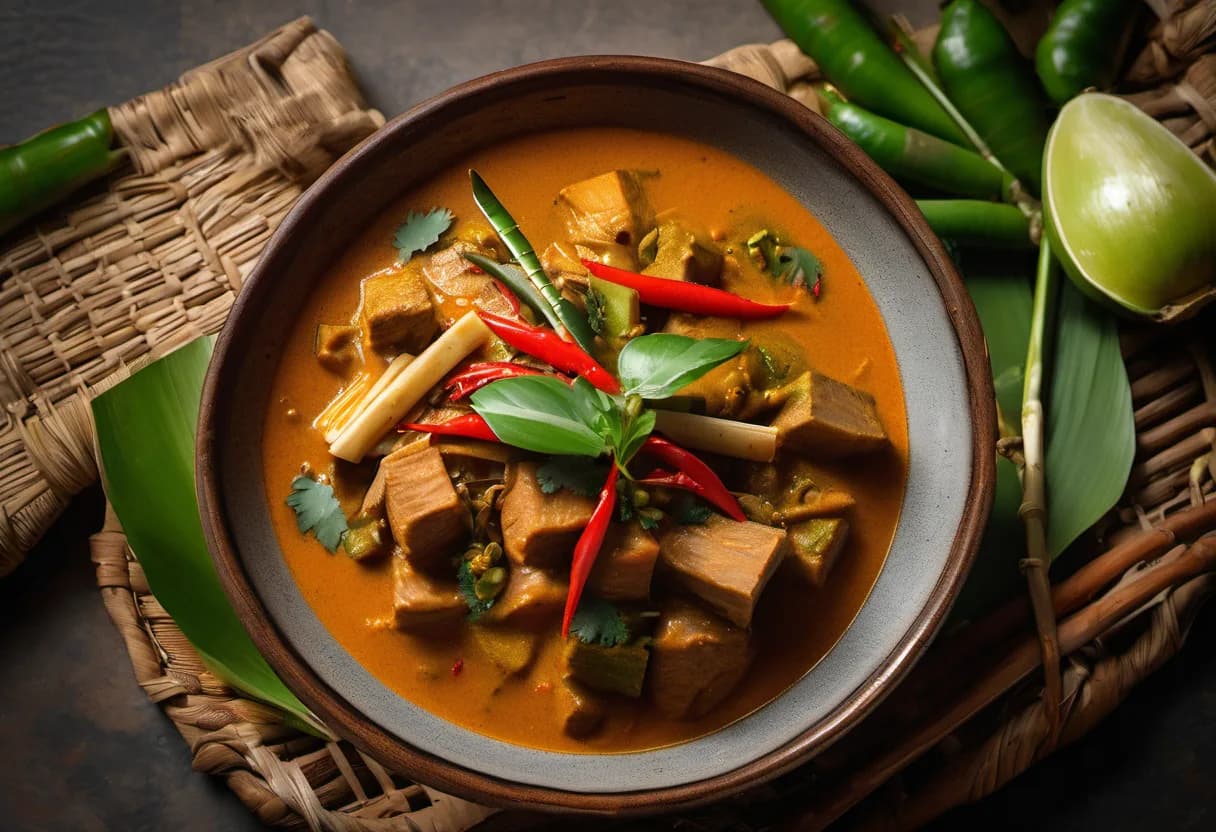
Jungle Curry (Gaeng Pa) is a fiery, coconut-free curry made with water, wild herbs, and a bold, pungent paste — the hottest of all Thai curries and traditionally cooked with wild game.
Cultural Origin
Gaeng pa, jungle curry, is a Central and Northern Thai countryside curry that contains no coconut milk — a clear, brothy, intensely hot curry that originated as a hunter's dish using whatever forest game and vegetables were available. The flavour comes from a fresh red chili paste, krachai (fingerroot), green peppercorns, holy basil and yardlong beans. It is the antithesis of the rich royal-court curries of Bangkok.
Regional Variants
| Region | How it differs |
|---|---|
| Central | Central gaeng pa is intensely spicy, clear-brothed, with krachai, green peppercorn and holy basil over pork or fish. |
| Northern | Northern versions often include local wild vegetables and forest mushrooms in addition to the chili paste. |
Allergens & Sensitivities
Key Ingredients
- red curry paste
- krachai (fingerroot)
- bamboo shoots
- Thai basil
- fish sauce
Taste profile
- Salty
- fish sauce, soy, shrimp paste
- Sweet
- palm sugar, coconut
- Sour
- lime, tamarind, fermentation
- Umami
- dried shrimp, fermented pastes, stock
With no coconut milk to cushion it, the chilli heat hits immediately and lingers; krachai gives a sharp, peppery, almost medicinal aroma that is the dish's most distinctive marker.
How Jungle Curry Is Made
- 1
Pounding a coconut-free paste
A base of dried and fresh red chillies is pounded with garlic, shallot, galangal and shrimp paste — hotter and simpler than a coconut-curry paste, since there is no cream to soften an overly aggressive chilli hit.
- 2
Frying in oil, not cream
Because there is no coconut cream to fry the paste in, it is fried directly in a little oil until fragrant, a technique closer to a stir-fry than a coconut curry.
- 3
Adding water and the protein
Water or stock is added rather than coconut milk, along with the meat — traditionally wild game, more often pork, chicken or fish in restaurants today — which simmers until cooked through in the thin, clear broth.
- 4
Adding krachai and vegetables
Sliced krachai (fingerroot), bamboo shoots, green peppercorns on the stem and yardlong beans go in next, contributing the dish's characteristic peppery bite.
- 5
Finishing without sugar
Fish sauce seasons the broth and holy basil is stirred through at the end; no sugar is added, which is part of why the dish tastes sharper and more savoury than any coconut curry.
When It’s Eaten
Eaten with rice as a fiery counterpoint to milder dishes in a shared meal, rarely ordered as a lone dish because of the heat; a common choice among Thai diners specifically looking for the spiciest option on the menu.
How to Order It
- ขอแกงป่าหนึ่งที่
- kor gaeng pa neung thi
- One jungle curry, please
- เผ็ดน้อยได้ไหม
- phet noi dai mai
- Can it be mild?
What people get wrong
Assuming it will taste lighter because it has no coconut milk — with nothing to buffer the chilli, jungle curry is generally hotter to the palate than any coconut-based curry, not milder.
Where to Try It
Central Thai restaurants and northern Thai eateries — rarely found on tourist menus.
Tips
- Request 'pet nit noi' (mildly spicy) unless you have genuine chilli tolerance — this curry has no coconut milk to soften the heat.