Gai Tod
ไก่ทอด
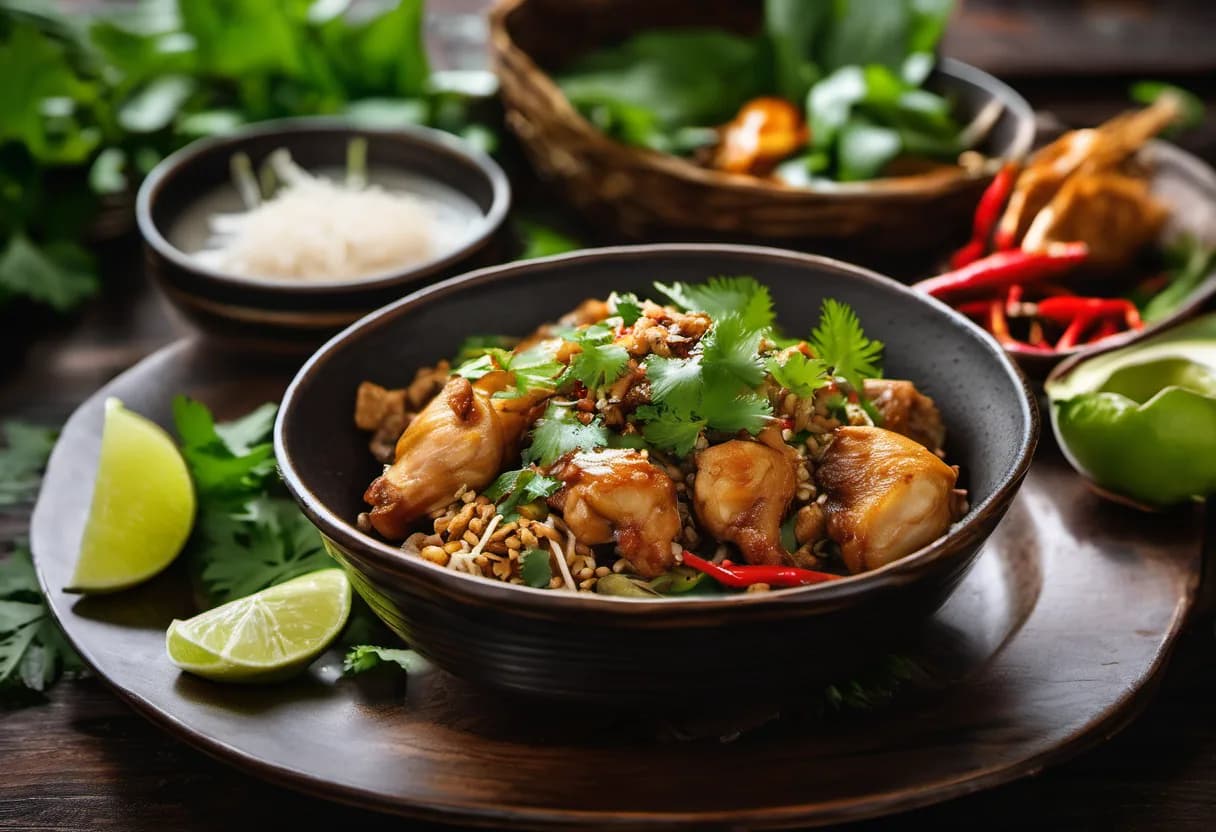
Gai Tod — Thai fried chicken — is one of Thailand's most beloved street foods: marinated chicken fried crispy in a fragrant crust of garlic, lemongrass, and coriander root, served with sticky rice and a sweet chilli dipping sauce.
Cultural Origin
Gai tod, Thai fried chicken, exists in several traditions: a marinated, often skin-on version with rice flour batter associated with Hat Yai in the south, an Isaan-style fried chicken marinated with garlic, coriander root and white pepper, and a Bangkok-Chinese version served with sticky rice. Hat Yai gai tod is finished with crispy fried shallots and is one of the south's most famous exports. All versions are paired with sticky rice and a sweet-spicy or tamarind dipping sauce.
Regional Variants
| Region | How it differs |
|---|---|
| Southern | Hat Yai gai tod is marinated in turmeric, garlic and white pepper, fried until dark and crisp, and topped with fried shallots. |
| Isaan | Isaan gai tod is heavily marinated with coriander root, garlic and fish sauce and eaten with sticky rice and jaew. |
| Central | Bangkok shophouses fry a Chinese-influenced version often paired with sticky rice and a sweet chili sauce. |
Allergens & Sensitivities
Key Ingredients
- chicken
- garlic
- coriander root
- white pepper
- oyster sauce
- fish sauce
- rice flour
Taste profile
- Salty
- fish sauce, soy, shrimp paste
- Sweet
- palm sugar, coconut
- Sour
- lime, tamarind, fermentation
- Umami
- dried shrimp, fermented pastes, stock
The herbal marinade of garlic, coriander root and white pepper sits mostly in the meat rather than the crust, so the first impression is a plain, well-salted crispness, with the marinade's flavour emerging once you bite through to the meat.
How Gai Tod Is Made
- 1
Making the marinade paste
A paste of garlic, coriander root and white pepper is worked together with a mortar and pestle rather than a food processor, since a slightly uneven texture is traditional and clings better to the meat.
- 2
Marinating
Chicken pieces sit in the paste with fish sauce and oyster sauce for at least an hour, long enough for the salt to draw moisture out and back into the meat.
- 3
Coating
Marinated pieces are dusted in a thin layer of rice flour rather than a thick batter, which is what gives Thai fried chicken its notably crisp, close-fitting crust.
- 4
Frying
Pieces are fried at a moderate temperature long enough to cook through, then briefly at a higher temperature to finish the crust, rather than one continuous fry.
- 5
Draining and resting
Fried pieces rest on a rack for a minute or two before serving, letting excess oil drip away so the crust stays crisp rather than greasy.
When It’s Eaten
Bought as a hand-held piece rather than plated, often alongside sticky rice, and eaten at any hour rather than tied to a single meal — a common choice for a car journey or a late-afternoon snack rather than a sit-down lunch.
How to Order It
- ขอไก่ทอดหนึ่งที่
- kor gai tod neung thi
- One order of fried chicken, please.
- ไม่ใส่ผักชี
- mai sai phak chi
- No coriander (cilantro).
What people get wrong
Ordering it expecting a thick, batter-heavy coating like Western fried chicken; the crust here is deliberately thin, so pieces look smaller and less generously coated than the price might suggest.
Where to Try It
Street food stalls, petrol station forecourts (genuinely excellent), and fresh markets throughout the country.
Tips
- Thai petrol station fried chicken (particularly Petcharat) has a cult following for good reason — try it.
- Order with khao niao (sticky rice) — the combination is the definitive Thai roadside meal.