Gaeng Tai Pla
แกงไตปลา
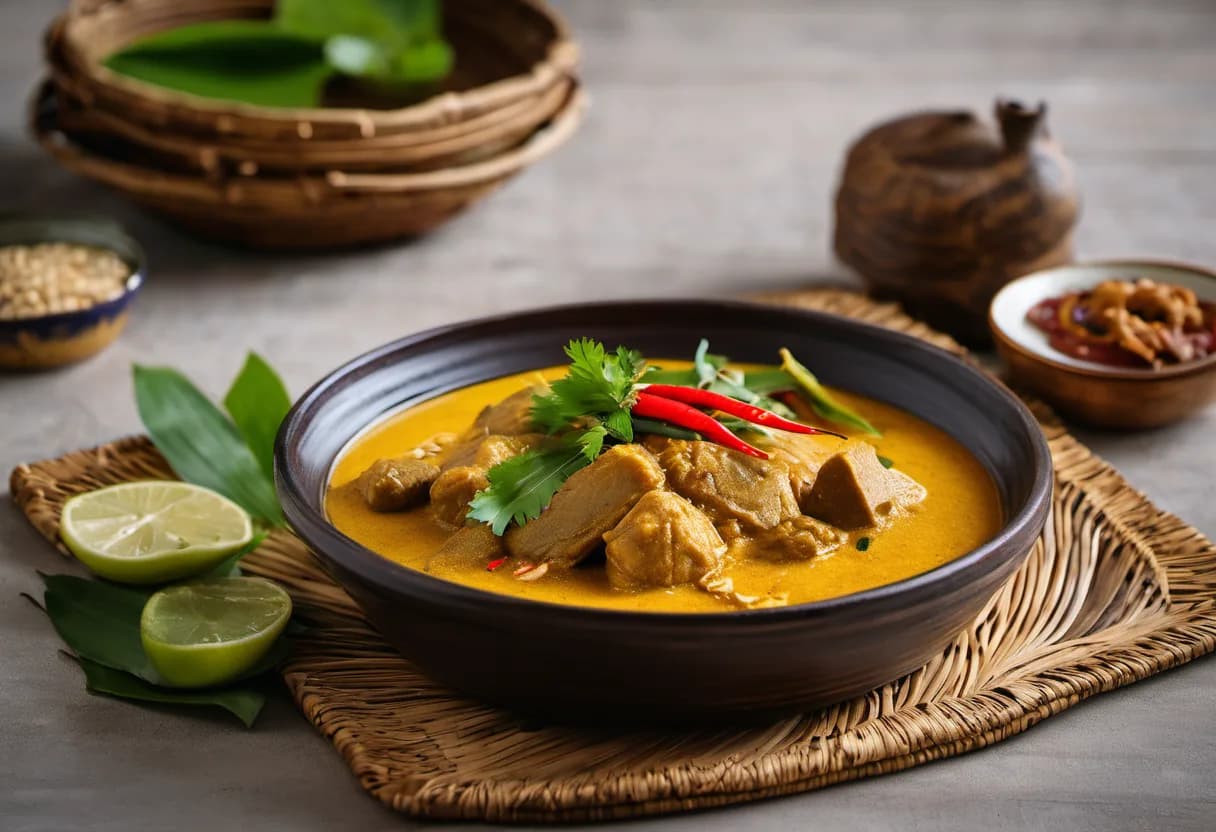
Gaeng Tai Pla is a notoriously pungent, intensely flavoured southern Thai curry made from fermented fish organs — rich, funky, fiery, and deeply loved by southern Thais.
Cultural Origin
Gaeng tai pla is a Southern Thai fish-innards curry built on fermented fish-stomach paste (tai pla) with turmeric, chili, lemongrass and southern aromatics. It is one of the most pungent and fiery dishes in the Thai canon and is a defining specialty of southern Thai cuisine, particularly around Nakhon Si Thammarat and Phuket. It is typically eaten with rice and fresh vegetables to temper the heat.
Regional Variants
| Region | How it differs |
|---|---|
| Southern | The Nakhon Si Thammarat and Phuket canonical version uses fermented fish-stomach paste, turmeric, southern chili and local vegetables for an intense, pungent curry. |
Allergens & Sensitivities
Key Ingredients
- fermented fish organs (tai pla)
- southern curry paste
- bamboo shoots
- long beans
- dried fish
Taste profile
- Salty
- fish sauce, soy, shrimp paste
- Sweet
- palm sugar, coconut
- Sour
- lime, tamarind, fermentation
- Umami
- dried shrimp, fermented pastes, stock
The fermented fish base carries an intense, funky aroma before it's even tasted; on the palate it reads as deeply savoury and salty rather than fishy in a fresh-fish sense, with a lingering, pungent aftertaste that divides opinion sharply.
How Gaeng Tai Pla Is Made
- 1
Fermenting the fish base
Tai pla — salted fish stomach and entrails — is fermented for weeks beforehand, the single ingredient that defines the dish and cannot be substituted or rushed.
- 2
Straining the tai pla stock
The fermented paste is simmered in water and strained to remove bone and sediment, producing an intensely savoury, cloudy stock that forms the curry's base.
- 3
Pounding a turmeric paste
A separate paste of chilli, turmeric, lemongrass, garlic and shallot is pounded and stirred into the strained tai pla stock, turmeric giving the broth its characteristic yellow-brown tint.
- 4
Adding fish and vegetables
Dried or fresh fish, bamboo shoots and long beans are added and simmered until tender, the vegetables chosen partly for their ability to stand up to the pungent broth.
- 5
Serving with raw vegetables
The curry is brought to the table with a plate of raw or blanched vegetables — cucumber, long beans, cabbage — meant to be eaten alongside it to temper the intensity.
When It’s Eaten
A southern Thai household and lunch-counter staple, eaten with rice and a plate of raw vegetables to cut the pungency — rarely a dish cooked for visitors unfamiliar with fermented fish flavours.
How to Order It
- ขอแกงไตปลาหนึ่งที่
- kor gaeng tai pla neung thi
- One Gaeng Tai Pla, please
- ไม่เผ็ดมาก
- mai phet mak
- Not too spicy
What people get wrong
Judging the dish by its smell alone and assuming it will taste unpleasantly fishy — southern Thai diners describe the flavour as deeply savoury rather than fishy, and the aroma is considerably stronger than the taste.
Where to Try It
Authentic southern Thai restaurants in Surat Thani, Nakhon Si Thammarat, and Bangkok's southern food specialists.
Tips
- Approach with an open mind — the pungent aroma is stronger than the flavour, which is deeply complex rather than simply 'fishy'.