Gaeng Som Pla
แกงส้มปลา
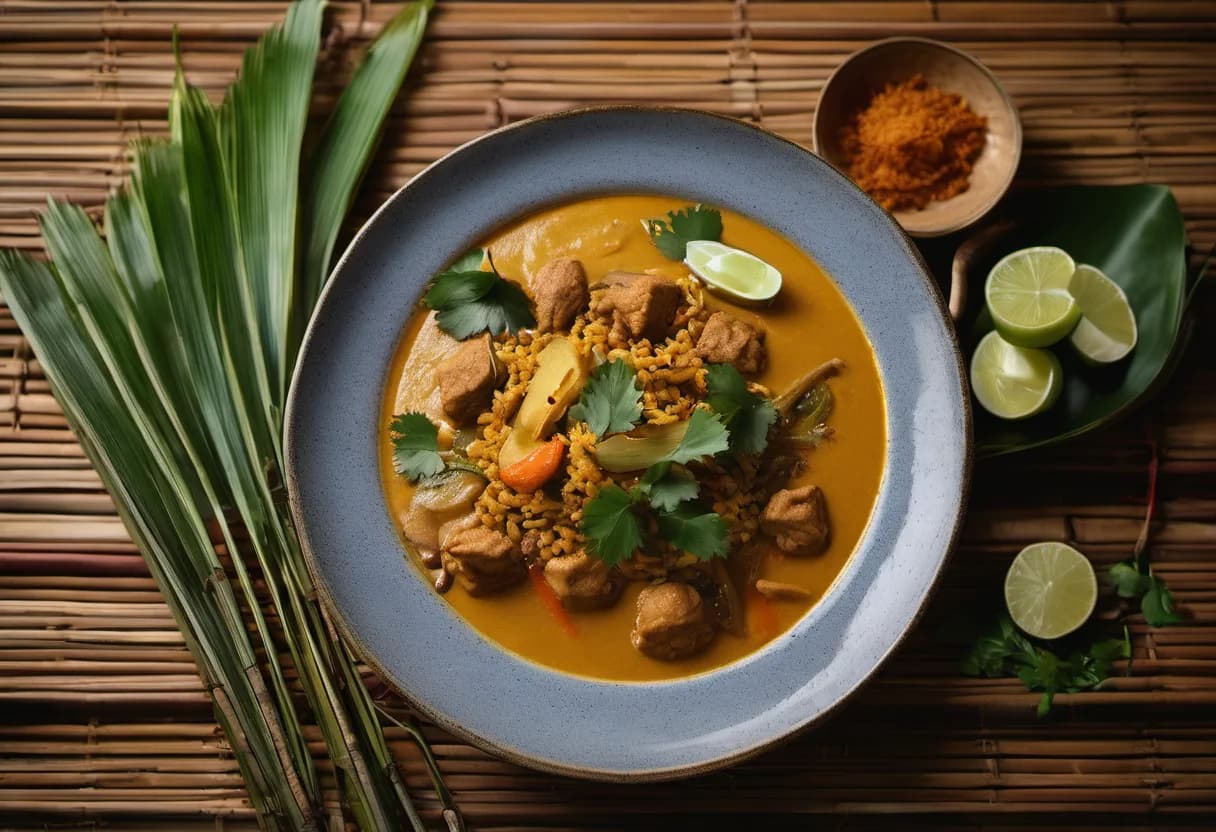
Gaeng Som Pla is the fish version of Thailand's sour curry — fragrant broth sharpened with tamarind, loaded with vegetables, and always made without coconut milk for a clean, bright flavour.
Cultural Origin
Gaeng som pla is the canonical sour fish curry of Central and Southern Thailand, built on a tamarind-and-chili paste with no coconut milk. The Central version uses freshwater fish such as snakehead with vegetables like cauliflower, kradon or morning glory, while the southern version (gaeng som tai) is far hotter, turmeric-yellow and uses sea fish. It is a household and shophouse staple rather than a royal-court dish.
Regional Variants
| Region | How it differs |
|---|---|
| Central | Central gaeng som pla uses tamarind-and-chili paste with freshwater fish and vegetables like cauliflower or kradon, in a thin sour broth. |
| Southern | Southern gaeng som tai is hotter, turmeric-yellow and made with sea fish and southern vegetables. |
Allergens & Sensitivities
Key Ingredients
- fish
- tamarind paste
- sour curry paste
- vegetables
- fish sauce
Taste profile
- Salty
- fish sauce, soy, shrimp paste
- Sweet
- palm sugar, coconut
- Sour
- lime, tamarind, fermentation
- Umami
- dried shrimp, fermented pastes, stock
Freshwater fish adds a savoury depth the prawn or mixed-vegetable version lacks; the broth stays thin and orange, with the fish's flakiness a textural contrast to the crunch of the accompanying vegetables.
How Gaeng Som Pla Is Made
- 1
Pounding a thin chilli paste
A simple paste of dried chilli, shallot, garlic and shrimp paste is pounded — thinner and sharper than a coconut curry paste, meant to dissolve fully into a broth rather than fry into a base.
- 2
Preparing the freshwater fish
A firm freshwater fish, snakehead or catfish traditionally, is cleaned and cut into pieces or filleted, chosen specifically for holding together in a simmering acidic broth.
- 3
Building the tamarind broth
The paste is stirred into water with tamarind pulp and brought to a simmer, the tamarind quantity adjusted until the sourness is pronounced but not overwhelming.
- 4
Poaching the fish briefly
The fish goes into the simmering broth and cooks briefly, just until opaque through, since Central Thai cooks are careful not to let freshwater fish overcook and fall apart.
- 5
Adding vegetables and seasoning to finish
Cauliflower, kradon or morning glory are added last for texture, and fish sauce with a touch of palm sugar rounds out the tamarind's sharpness just before serving.
When It’s Eaten
A household staple across the Chao Phraya basin, eaten as a main alongside plain rice and usually a milder dish to offset the acidity — less commonly found dressed up on tourist-facing menus than the coconut curries.
How to Order It
- ขอแกงส้มปลาหนึ่งที่
- kor gaeng som pla neung thi
- One sour fish curry, please
- ปลาช่อน
- pla chon
- Snakehead fish
What people get wrong
Confusing this with the wider gaeng som family and assuming any protein will do — the fish version is specifically built around a firm freshwater fish that holds its shape, unlike the prawn or vegetable variants of the same sour broth.
Where to Try It
Central Thai restaurants and home cooking throughout the Chao Phraya basin.
Tips
- Pair with steamed jasmine rice and a mild dish to balance the sourness.