Boat Noodles
ก๋วยเตี๋ยวเรือ
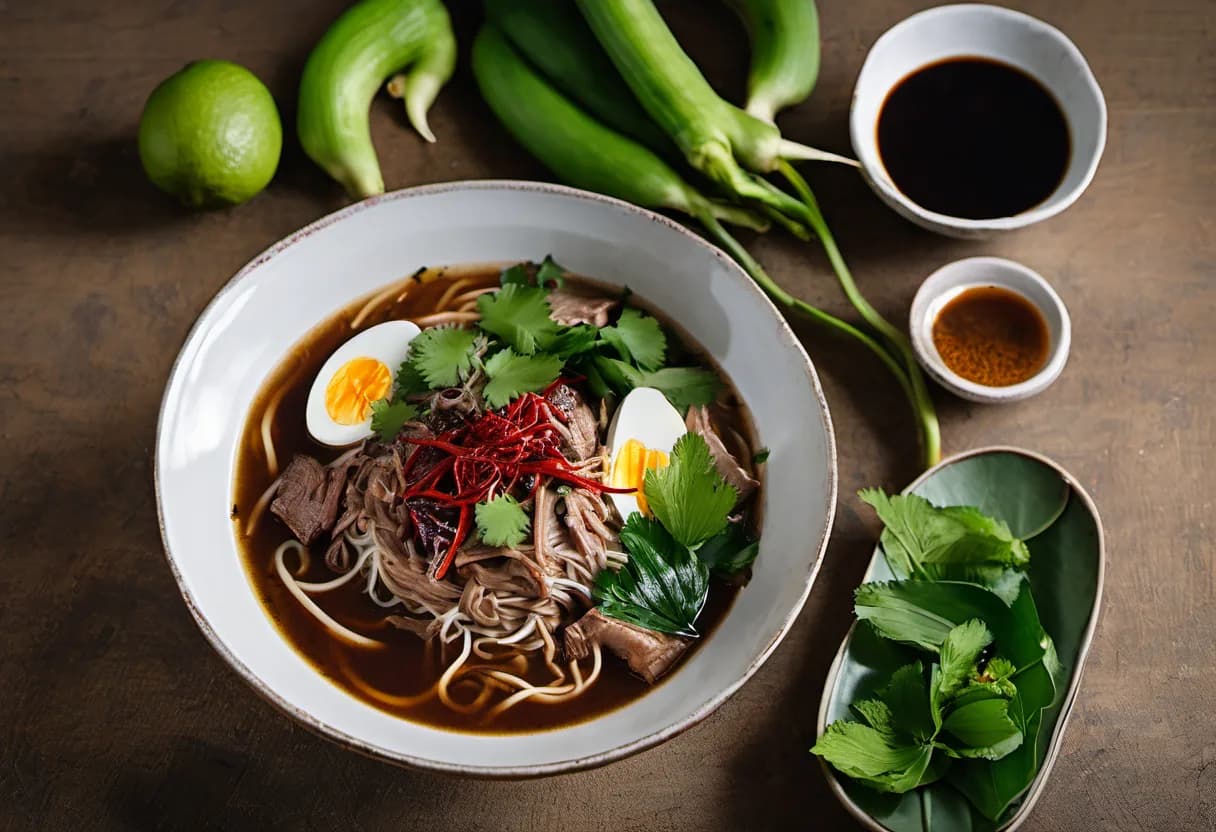
Boat Noodles (Guay Teow Reua) are intensely flavoured small bowls of noodle soup with a dark broth enriched with pork blood, five-spice, and herbs. Historically sold from boats along Bangkok's canals, they're served in tiny portions — order four or five bowls.
Cultural Origin
Guay teow reua, boat noodles, originated in the canal communities of the Central Plains, particularly around Ayutthaya and Bangkok's Rangsit and Bang Khen areas, where vendors served them from boats moored on the klongs in the mid-20th century. The signature dark, thick broth uses pork or beef blood, offal, cinnamon and star anise, served in tiny bowls so it stays hot. Today it is most famously associated with Victory Monument's boat-noodle alley in Bangkok.
Regional Variants
| Region | How it differs |
|---|---|
| Central | The canonical Ayutthaya/Bangkok version uses beef or pork with a dark blood-thickened broth, offal, and Chinese spice notes, served in small bowls. |
Allergens & Sensitivities
Key Ingredients
- rice or egg noodles
- pork blood broth
- five-spice
- bean sprouts
- morning glory
Taste profile
- Salty
- fish sauce, soy, shrimp paste
- Sweet
- palm sugar, coconut
- Sour
- lime, tamarind, fermentation
- Umami
- dried shrimp, fermented pastes, stock
The darkest, most savoury bowl on a Thai noodle menu — pork blood and five-spice give it a dense, mineral depth rather than a bright top note, with acidity coming only from the vinegar diners stir in themselves.
How Boat Noodles Is Made
- 1
Broth base
Pork or beef bones are simmered with five-spice, cinnamon and star anise into a dark, concentrated stock — the small serving size means the broth can afford to be far more intense than a standard noodle soup base.
- 2
Blood thickening
Pork or beef blood is stirred into the broth, where it cooks through and thickens the liquid slightly, deepening the colour and giving the broth its characteristic weight.
- 3
Noodle choice
Either thin rice noodles or egg noodles are blanched to order in a small portion, since bowls are served miniature rather than as a full single serving.
- 4
Assembly
Sliced meat, morning glory and bean sprouts are added to the hot broth in the small bowl, which is topped up rather than stirred at length.
- 5
Repeat service
Vendors serve one small bowl at a time and expect diners to order several rounds, tallying the empty bowls to work out the bill at the end.
When It’s Eaten
A snack or light meal rather than a single sit-down dish, traditionally eaten in a quick round of several small bowls at a dedicated boat-noodle stall rather than ordered as a single portion alongside other food.
How to Order It
- ไม่ใส่เลือด
- mai sai luat
- no blood
- เส้นเล็ก
- sen lek
- thin rice noodles
- ไม่ใส่ตับ
- mai sai tap
- no liver
What people get wrong
Ordering only one bowl — the portions are deliberately tiny, roughly a few mouthfuls each, so a single bowl reads as a taster rather than a meal and leaves most first-timers still hungry.
Where to Try It
Victory Monument area in Bangkok has a famous boat noodle alley — or try the historic floating market vendors in Ayutthaya.
Tips
- Order 4–5 small bowls — the serving size is intentionally tiny, a tradition from the canal boat days.
- Add a dash of vinegar and sugar from the condiment set to balance the rich, dark broth.