Ba Mee Moo Daeng
บะหมี่หมูแดง
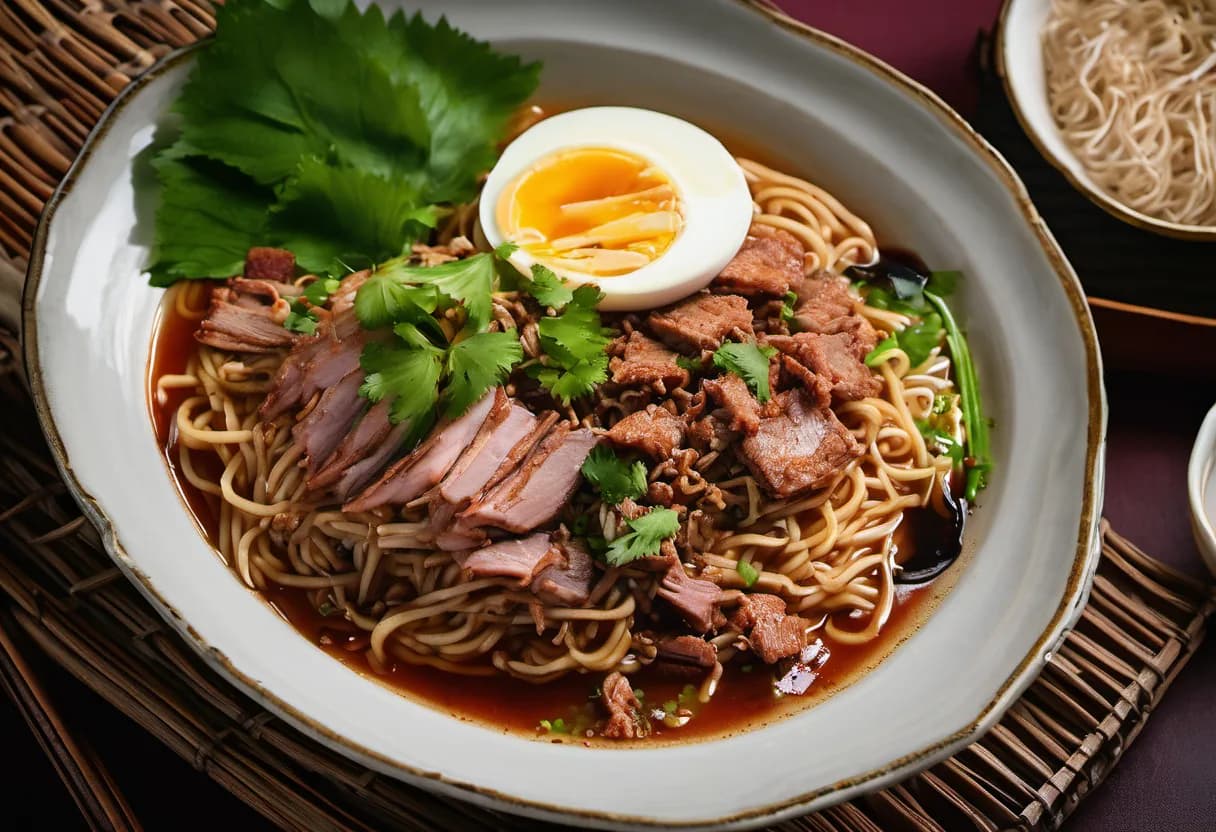
Ba Mee Moo Daeng is egg noodles served dry or in broth, topped with slices of Chinese-style red barbecue pork (char siu) — a popular Thai-Chinese breakfast and lunch staple.
Cultural Origin
Ba Mee Moo Daeng is a Chinese-Thai dish combining Cantonese-style red roast pork (char siu) with egg-and-wheat noodles introduced by Hokkien and Cantonese migrants to Bangkok and the central plains in the late 19th and early 20th centuries. It is a quintessential Thai-Chinese noodle-shop staple, particularly associated with old shophouse neighborhoods like Yaowarat.
Allergens & Sensitivities
Key Ingredients
- egg noodles
- char siu pork
- pork broth
- fish sauce
- spring onion
Taste profile
- Salty
- fish sauce, soy, shrimp paste
- Sweet
- palm sugar, coconut
- Sour
- lime, tamarind, fermentation
- Umami
- dried shrimp, fermented pastes, stock
Balances the sweetness of the lacquered pork against a savoury pork broth, with the springy egg noodles carrying relatively little flavour of their own — the char siu's honeyed edge is the dish's clearest signature.
How Ba Mee Moo Daeng Is Made
- 1
Roasting the pork
Pork is marinated in soy, honey and five-spice, then roasted until the exterior lacquers and caramelises — this is done well ahead of service and sliced to order.
- 2
Broth
A light pork broth seasoned with fish sauce and white pepper is kept simmering separately, used either poured over the noodles or served on the side.
- 3
Noodles
Fresh egg noodles are blanched briefly in boiling water, just long enough to cook through without losing their spring.
- 4
Style choice
The noodles are tossed with a little seasoning and served either dry (haeng) with the broth on the side, or wet (nam) with broth poured directly over — the toppings and pork are identical either way.
- 5
Assembly
Sliced red pork is fanned over the noodles along with spring onion, and the dish is finished at the table with whichever condiments the diner prefers.
When It’s Eaten
A breakfast and lunch staple sold from Thai-Chinese noodle shops from early morning onward, ordered as a quick single-bowl meal rather than shared.
How to Order It
- บะหมี่หมูแดง
- ba mee moo daeng
- one bowl of Ba Mee Moo Daeng
- ขอแบบแห้ง
- kor baep haeng
- dry style, please
- ไม่ใส่ต้นหอม
- mai sai ton hom
- no spring onion
What people get wrong
Not specifying dry or wet when ordering — most shops default to one style unless asked, so a diner who wants noodles served in broth (nam) rather than tossed dry (haeng) needs to say so up front.
Where to Try It
Thai-Chinese noodle shops across Bangkok; Chinatown area is the best concentration.
Tips
- Order it 'haeng' (dry) for noodles in a small bowl with sauce on the side and a separate broth — the preferred Thai style for maximum flavour control.