Ba Mee Haeng
บะหมี่แห้ง
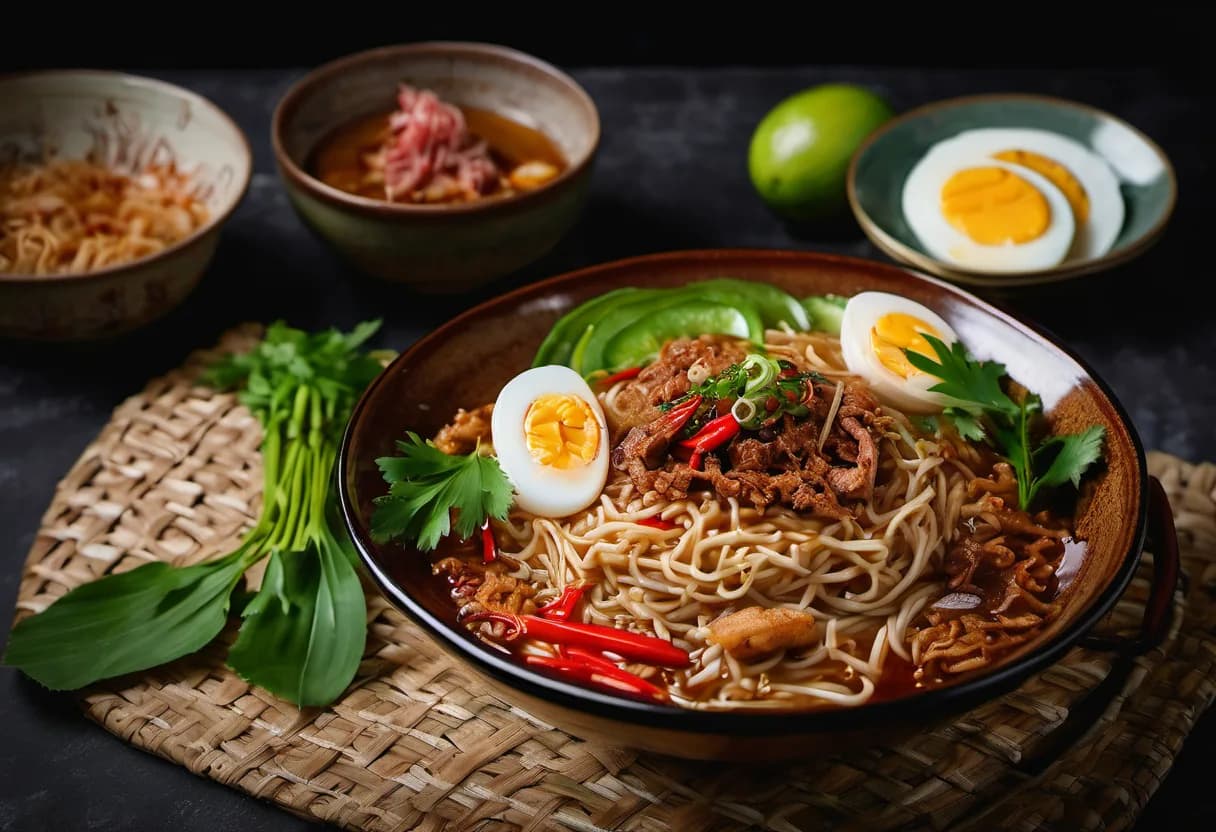
Ba Mee Haeng is a dry egg noodle dish — springy yellow wheat noodles served without broth, tossed with lard, crispy shallots, sliced BBQ pork, and a soft-boiled egg, with condiments to season yourself. A Thai-Chinese classic.
Cultural Origin
Ba mee haeng — dry egg noodles — is a Teochew Chinese-derived shophouse dish brought to Thailand by Chinese immigrants over the 19th and 20th centuries. The egg noodles are blanched and tossed in soy, garlic oil, sometimes a touch of vinegar and pork fat, then topped with barbecued red pork (moo daeng), wontons or roast duck. It is a default Bangkok lunch and remains strongly tied to Chinese-Thai shophouse culture.
Regional Variants
| Region | How it differs |
|---|---|
| Central | The Bangkok-Teochew standard tosses egg noodles in soy and garlic oil, topped with moo daeng, wontons and Chinese greens. |
| Southern | Southern versions sometimes use yellow turmeric noodles and add curry-style toppings reflecting Malay influence. |
Allergens & Sensitivities
Key Ingredients
- egg noodles
- BBQ pork (char siu)
- lard
- crispy shallots
- soft-boiled egg
- fish sauce
- white pepper
Taste profile
- Salty
- fish sauce, soy, shrimp paste
- Sweet
- palm sugar, coconut
- Sour
- lime, tamarind, fermentation
- Umami
- dried shrimp, fermented pastes, stock
A drier, richer mouthful than its broth-based cousins — rendered pork fat and crispy shallots coat the noodles instead of soup, so the flavour reads as concentrated rather than diluted, with the side broth used to reset the palate between bites.
How Ba Mee Haeng Is Made
- 1
Noodles
Fresh egg noodles are blanched briefly in boiling water, then drained quickly so they stay springy rather than waterlogged.
- 2
Tossing
The noodles are tossed while still hot with a little rendered pork lard, soy sauce and garlic oil, coating every strand before any topping is added — this step is what separates a good haeng bowl from a dry, under-seasoned one.
- 3
Toppings
Sliced char siu pork and crispy fried shallots are layered on top rather than mixed through, so their texture stays distinct from the tossed noodles underneath.
- 4
Egg
A soft-boiled egg is halved and placed on top, its yolk meant to be broken into the noodles by the diner rather than pre-mixed.
- 5
Side broth
A small separate cup of light pork broth is served alongside, meant for sipping between bites rather than poured over the noodles.
When It’s Eaten
A quick lunch dish sold at Thai-Chinese shophouses, eaten as a single fast meal rather than shared, with the side broth sipped between mouthfuls rather than combined with the noodles.
How to Order It
- บะหมี่แห้ง
- ba mee haeng
- dry egg noodles, please
- ไม่ใส่หมูแดง
- mai sai moo daeng
- no red pork
- ขอน้ำซุปแยก
- kor nam sup yaek
- broth on the side, please
What people get wrong
Pouring the side broth over the noodles — that turns the dish into ba mee nam and washes away the lard and soy coating that the dry style is built around; the broth is meant to be drunk separately.
Where to Try It
Chinese-influenced noodle shops in Bangkok's Chinatown (Yaowarat) and Thai-Chinese communities throughout the country.
Tips
- The tossing technique matters — mix the noodles thoroughly with the lard and seasonings before adding toppings.
- A small cup of broth is usually provided on the side — drink it to round out the meal.